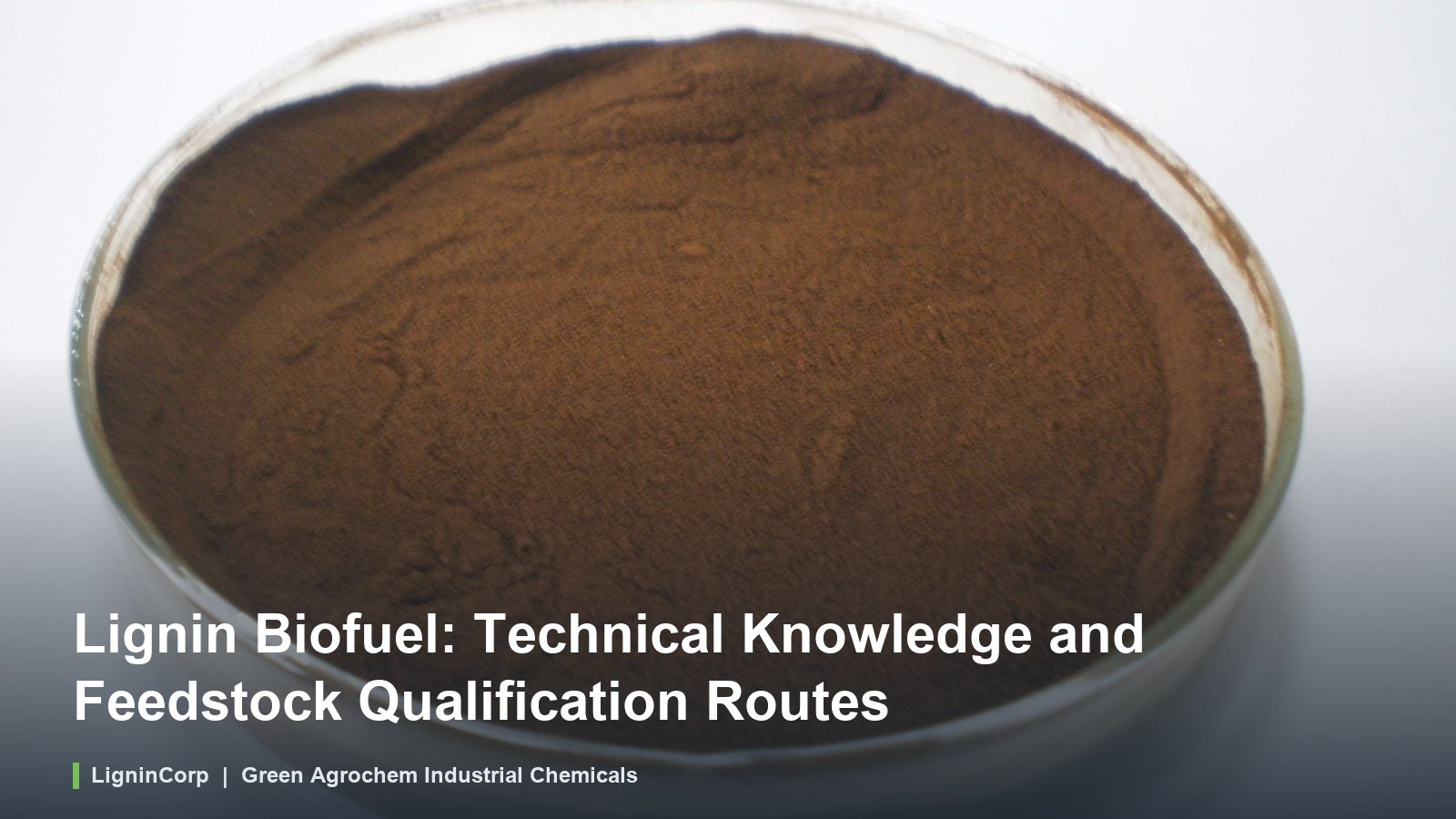
“Lignin biofuel” can mean direct energy recovery, pyrolysis or liquefaction products, gasification syngas, or catalytically upgraded fuel-range molecules. These routes have different feedstock requirements, maturity, mass and energy balances, product specifications and environmental outcomes.
For a neutral technical explanation, use the Lignin Biofuel: Conversion Routes, Limits and Evaluation knowledge page. For purchasing and project qualification, use the Lignin for Biofuel: Industrial Feedstock Qualification Guide.
Choose the Correct Route
| User intent | Best page | What it covers |
|---|---|---|
| Understand conversion technologies and limitations | Lignosulfonate.com knowledge page | Combustion/recovery, pyrolysis, liquefaction, gasification, depolymerization, upgrading and life-cycle boundaries |
| Qualify an industrial lignin-rich feedstock | LigninCorp procurement page | Origin, moisture, ash, sulfur, metals, heating value, feedability, yields, equipment compatibility, documents and RFQ fields |
Former Numerical Claims: Evidence Status
| Former value | Evidence/status | Correct treatment |
|---|---|---|
| Lignin is 15–30% of lignocellulosic biomass | Broad literature-style range without species, tissue, basis or source. | Use only with a cited material system or measured feedstock analysis. |
| Lignin contains 55–65% carbon versus cellulose at 40–45% | Broad comparison without analytical method, feedstock or source. | Do not use as an exact-grade property; request ultimate analysis on a defined moisture/ash basis. |
| Up to 70% or 50–70% greenhouse-gas reduction | Unsupported universal life-cycle result. | Requires a pathway-specific LCA defining feedstock, allocation, energy, hydrogen, transport, coproducts, yield and fossil comparator. |
| 10–20% fossil-fuel blend | Unverified blend range without finished-fuel chemistry, specification or jurisdiction. | Not a general recommendation; qualify the finished blend under the applicable fuel standard. |
| 250 billion litres of global biofuel production by 2025 | Unsourced forecast whose date has passed. | Historical/unverified only; exclude from project decisions unless replaced by a current named source and scope. |
| Global biofuel market above USD 200 billion by 2030 | Unsourced market forecast not specific to lignin-derived fuel. | Do not use as evidence of project viability; require current market definition, publisher, date and methodology. |
| 110 billion litres of cellulose-based biofuel in 2024 | Unverified category and volume without geographic/product definition or source. | Retain for traceability only until a primary statistical source is verified. |
Former Technical and Sustainability Claims
The old page described lignin-derived liquids as biodiesel, gasoline, jet fuel and marine fuel; stated that upgraded bio-oils meet aviation standards; and claimed carbon neutrality, lower sulfur/particulate emissions, low-cost feedstock and new revenue. These outcomes are not properties of lignin itself. Raw bio-oil is not automatically a finished transport fuel, and specification compliance must be demonstrated for the final product and approved pathway. Economics depend on material opportunity cost, drying, pretreatment, hydrogen, catalyst life, yield, separation, utilities, residue handling and logistics.
Minimum Evidence for a Lignin-Fuel Project
- Feedstock identity, origin and isolation process; representative sampling and current analysis.
- Moisture, ash, sulfur, chlorine, metals, heating value and physical handling data on stated bases.
- Defined conversion conditions and complete mass/energy balance covering gas, liquid, char and losses.
- Product composition, stability, contaminants, upgrading demand and applicable finished-fuel tests.
- Equipment, emissions-control, catalyst, corrosion, residue and chemical-recovery implications.
- Economic and life-cycle models with transparent system boundaries and current inputs.
For industrial feedstock documents and project inquiries, contact info@greenagrochem.com.
