
B2B industrial dispersant supply
Dispersant NNO
Dispersant NNO is an anionic naphthalene sulfonate formaldehyde condensate dispersing agent used for dye dispersion, pigment wetting, textile auxiliaries, coatings, wettable powders, ceramic and mineral slurries, carbon material dispersion and other water-based solid-liquid systems that need particle separation and suspension stability.
LigninCorp supplies Dispersant NNO for manufacturers, formulators, distributors and purchasing teams that need specification comparison, TDS/MSDS support, sample testing, export packing coordination and practical grade selection for industrial production.
Product Overview
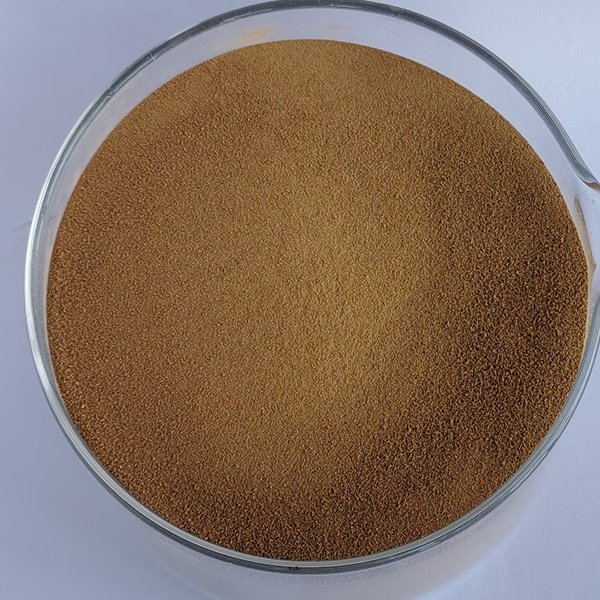
Dispersant NNO, also called sodium salt of naphthalene sulfonate formaldehyde condensate, is a brown powder that dissolves in water and works as a dispersing and protective colloid aid. Its main role is to reduce particle agglomeration, improve wetting and help keep insoluble solids distributed more evenly in suitable aqueous systems.
Buyers usually compare NNO with Dispersant MF, sodium lignosulfonate, calcium lignosulfonate and powder wetting agent for industrial formulations when they are tuning particle wetting, grinding efficiency, colorant dispersion or slurry stability.
Buyer selection note
Grade selection should consider active content, disperse power, sodium sulfate level, pH, water insolubles, calcium and magnesium content, electrolyte tolerance, target solids content, processing temperature and compatibility with dyes, pigments, minerals or other formulation auxiliaries.
Main Specification
The specification below follows the current live product page for Dispersant NNO. Final commercial TDS and COA should be confirmed by agreed grade, shipment batch and intended application.
| Item | NNO-Grade A | NNO-Grade B | NNO-Grade C | Buyer Note |
|---|---|---|---|---|
| Appearance | Brown powder | Brown powder | Brown powder | Typical visual form for NNO powder supply. |
| Composition | Naphthalene sulfonate formaldehyde condensate | Naphthalene sulfonate formaldehyde condensate | Naphthalene sulfonate formaldehyde condensate | Main chemistry used for dispersion and protective colloid behavior. |
| Ion type | Negative ion | Negative ion | Negative ion | Anionic dispersant; check compatibility with cationic additives. |
| Content | 95% min | 92% min | 95% min | Higher content is often preferred for more demanding formulation review. |
| Disperse power, standard product | 95% min | 90% min | 95% min | Core performance indicator for dye, pigment and slurry dispersion screening. |
| Sodium sulfate | 5% max | 18% max | 22% max | Lower sulfate is useful when salt level affects color, bath stability or formulation balance. |
| pH, 1% water solution | 7-9 | 7-9 | 7-9 | Confirm pH compatibility with dye bath, coating, mineral slurry or wettable powder system. |
| Calcium and magnesium | 0.4% max | 0.4% max | 0.4% max | Important where water hardness or ion sensitivity affects dispersion. |
| Insolubles in water | 0.05% | 0.05% | 0.05% | Relevant for filtration, spray systems and fine dispersion processes. |
Grade Selection Guide
Industry Application Depth
Textile Dyeing and Dye Dispersion
NNO is commonly reviewed for dye particle dispersion, dye bath uniformity and auxiliary blending. Textile buyers should compare dye type, bath pH, salt level, temperature and compatibility with other auxiliaries. See textile dye dispersant and Dispersant MF.
Pigment, Paint and Coating Systems
For pigments and coatings, Dispersant NNO can support wetting, grinding, particle separation and slurry stability in suitable water-based systems. Review pigment paints coating dispersant and wetting and dispersing agent blend.
Wettable Powder and Agrochemical Formulation
NNO may be evaluated in wettable powder or suspension-style formulations where powder wetting, dispersion and re-dispersion behavior matter. Buyers should verify active ingredient compatibility, local regulatory requirements and storage stability before agricultural formulation use.
Ceramic, Refractory and Mineral Slurries
In mineral, ceramic or refractory systems, NNO can help distribute fine particles and reduce agglomeration. Compare with ceramic and refractory additives and mineral processing and mining.
Carbon Black and Industrial Suspensions
For carbon black, graphite, fillers or insoluble powders, NNO may support wetting and dispersion when the formulation is water-based and anionic compatibility is acceptable. Compare with battery and carbon material additives.
Lignosulfonate and Naphthalene Dispersant Comparison
Buyers often compare NNO with sodium lignosulfonate dispersant grade and calcium lignosulfonate dispersant grade powder when balancing cost, dispersion strength and system compatibility.
Formulation and Procurement Checks
Before approving Dispersant NNO for production, test the actual powder, pigment, dye, mineral or active ingredient system. Lab screening should include dispersion time, particle size distribution, viscosity, settling behavior, re-dispersion, foam tendency, filtration behavior, pH drift and storage stability.
Procurement teams should decide whether NNO-Grade A, NNO-Grade B or NNO-Grade C is more suitable. Lower sodium sulfate may matter for dye shade control, bath stability, conductivity, high-solids formulations or sensitive downstream processes, while Grade C may be acceptable in cost-sensitive systems after buyer-side trials.
Compatibility caution
NNO is an anionic dispersant. Check compatibility before combining it with cationic materials, high-hardness water, strong electrolytes, specialty resins, biocides, pigments, dyes or active ingredients that may be sensitive to salt or pH.
Packaging, Documents and Internal Resources
Dispersant NNO is typically supplied as powder for B2B industrial use. Packaging, palletizing, shipping marks, document package and sample dispatch can be coordinated according to grade, order quantity and destination port.
For technical review, request the latest TDS, MSDS/SDS, COA, sample availability, packing details and formulation notes for the target application.
Documents to request
TDS for specification review, MSDS/SDS for safety and handling, COA for batch confirmation, and sample information for lab approval.
Buyer Questions
What is Dispersant NNO mainly used for?
Dispersant NNO is mainly used in dye, pigment, textile auxiliary, wettable powder, coating, mineral slurry and selected industrial suspension systems where particle wetting and dispersion stability are needed.
How are NNO-Grade A, Grade B and Grade C different?
Grade A has 95% min content, 95% min disperse power and 5% max sodium sulfate. Grade B has 92% min content, 90% min disperse power and 18% max sodium sulfate. Grade C has 95% min content, 95% min disperse power and 22% max sodium sulfate.
Can NNO be used with lignosulfonate dispersants?
It may be compared or used in systems where anionic dispersants are suitable, but compatibility should be tested with the actual formulation, water quality, pH, salts, binder, resin, pigment or active ingredient.
What should I send before requesting a quotation?
Send the target application, desired grade, expected dosage, solids content, water quality, monthly quantity, destination port, packaging requirement and whether samples, TDS, MSDS/SDS or COA are needed.
Request Dispersant NNO Grade Support
Send your formulation type, target grade, monthly volume, document needs and destination port. LigninCorp can help compare NNO-Grade A, Grade B and Grade C and provide quotation support.