
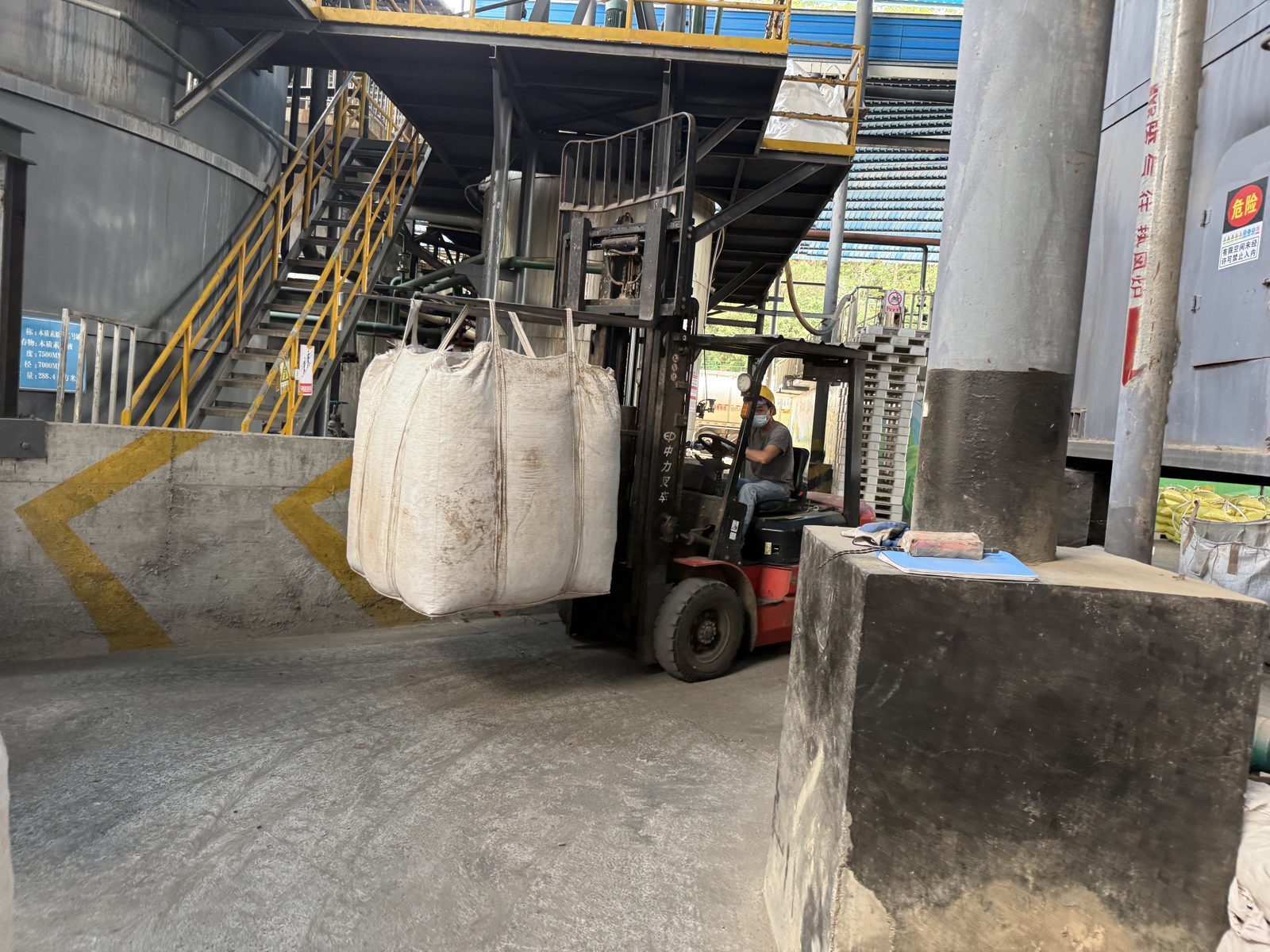
Coal fines, charcoal dust, sawdust and coke breeze are hard to sell or burn as loose powder. Pressing them into briquettes with a binder turns them into a handleable fuel or furnace feed. Lignosulfonate is a water-soluble, cold-bonding binder for this job. This page covers dosage, solution strength, pressing and curing conditions, quality checks and the limits of lignosulfonate binders. For the binding mechanism, see how lignosulfonate works as a natural binder.
Where It Is Used
| Feedstock | Typical product | Note |
|---|---|---|
| Coal fines and slack coal | Fuel briquettes (roll press or piston press) | Recovers fines that would otherwise be waste |
| Charcoal dust and biomass (sawdust, agricultural residue) | Barbecue and industrial fuel briquettes | Density and handling strength depend on fibre and moisture |
| Coke breeze and metallurgical fines | Briquettes for furnace re-use | Check sulfur and ash limits for the furnace |
Usage Guidance from the Briquette Binder TDS
| Step | Starting point | Note |
|---|---|---|
| Dosage | 3–8% by dry mass of fines; start at 4–5% | Adjust for fineness, moisture and target strength |
| Solution | 5–15% binder solution | Warm water (40–60 °C) speeds dissolution |
| Mixing | Paddle or ribbon mixer to 12–18% total moisture | Uneven mixing gives weak briquettes |
| Pressing | Roll press 15–40 MPa; piston or hydraulic press 40–100+ MPa | Set per press type and briquette shape |
| Curing | Air dry or 40–80 °C for 24–72 h | Avoid rapid high-heat drying |
| Quality checks | Drop strength (1–2 m drop), compressive strength, water-immersion weight loss | Adjust dosage or press settings if targets are missed |
Source: GAC-BRQ BINDER TDS. Dosage, pressure and cure time must be confirmed in laboratory or pilot tests on the actual fines and press.
Binder Specification
| Parameter | GAC-BRQ BINDER |
|---|---|
| Form | Dark brown water-soluble powder |
| Organic matter content | ≥60% |
| Water solubility | ≥95% |
| Fineness | ≥80 mesh (particle diameter ≤0.18 mm) |
| pH | 7–10 |
Limits to Plan Around
- Water sensitivity: lignosulfonate dissolves in water, so outdoor stockpiles need covered storage or a water-resistant co-binder.
- Sulfur and ash: the binder adds some sulfur and inorganic matter; check fuel or furnace specifications.
- Curing time: strength builds as the briquettes dry, so plan storage space for 24–72 hours of curing.
- Feedstock variation: a dosage set on one coal or biomass does not transfer automatically to another.
Related Binder Applications
For other agglomeration jobs see carbon black pellet binder, foundry sand binder and carbon black and coal briquette binders. Binder grades: sodium lignosulfonate binder grade.
Packaging and Documents
- Powder: 20 kg or 25 kg woven bags with polyethylene liner, or 500 kg / 600 kg jumbo bags (FIBC).
- Liquid grades: IBC totes, drums or flexitanks.
- Documents: TDS, SDS and batch COA; samples for laboratory work.
Request a Sample
Send the feedstock type (coal, charcoal, biomass or coke breeze), fines size, press type, target briquette strength and monthly quantity to info@greenagrochem.com or use the contact form.
Frequently Asked Questions
How much lignosulfonate binder is used in briquettes?
The GAC-BRQ briquette binder TDS gives 3–8% by dry mass of the fines, starting at 4–5% for first trials. Very fine or high-ash feedstocks may need the upper end.
Do lignosulfonate-bonded briquettes need heat curing?
No. It is a cold-bonding binder. The TDS recommends air drying or low-temperature drying at 40–80 °C for 24–72 hours, and warns that rapid high-heat drying can crack the binder film.
Are the briquettes water-resistant?
Only moderately, after full cure. Lignosulfonate is water-soluble, so briquettes stored outdoors may need a co-binder or covered storage. Test water-immersion weight loss.
Can it be blended with other binders?
Yes. The TDS lists starch, molasses, bentonite and cement-type binders as co-binders for reaching the target strength at lower overall cost.
