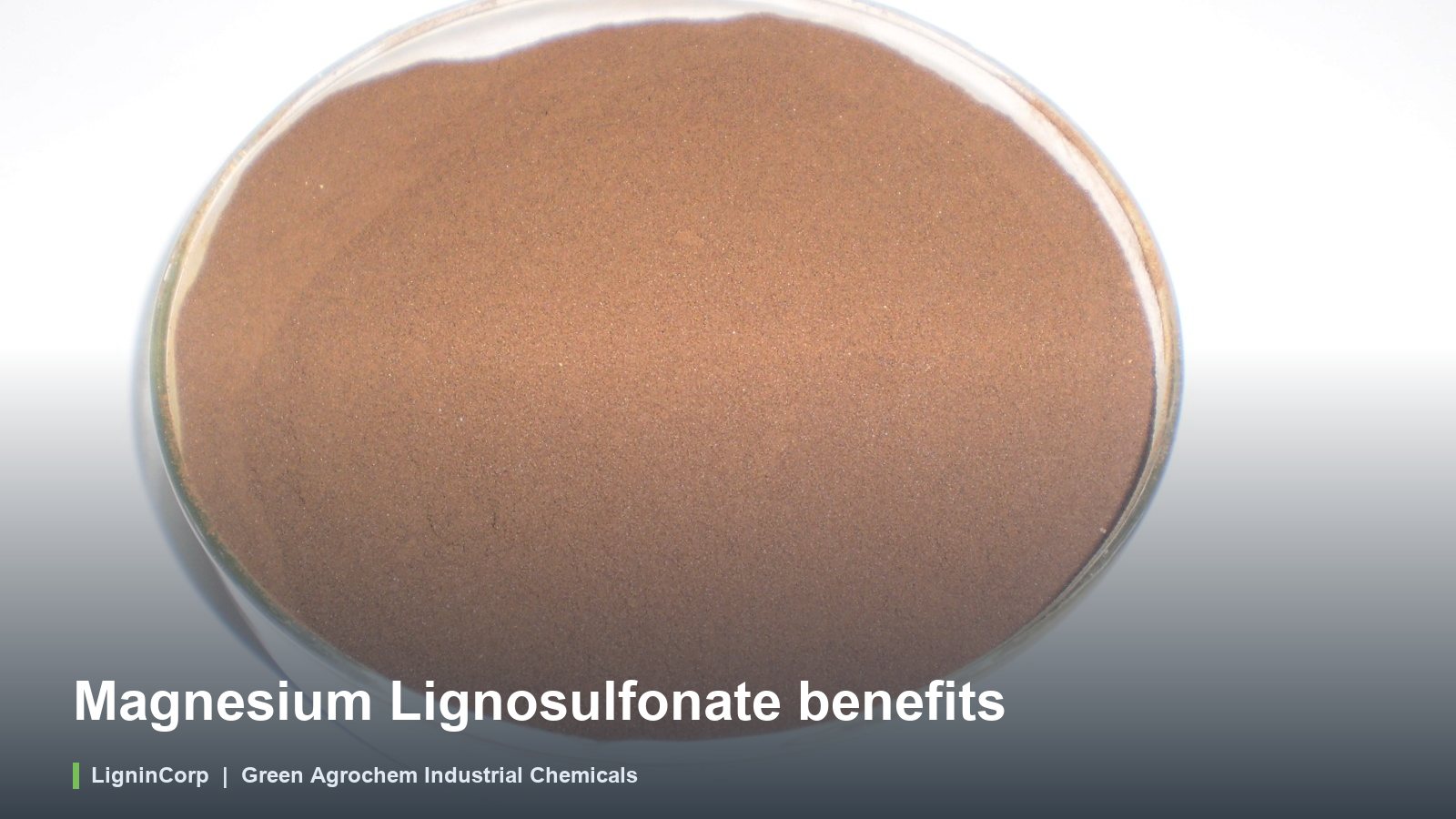
Magnesium lignosulfonate, a water-soluble anionic polyelectrolyte derived from the sulfite pulping process of wood, offers a wide range of benefits across multiple industries due to its unique chemical and physical properties. As a byproduct of the paper industry, it is a sustainable, biodegradable, and non-toxic compound, making it an attractive alternative to synthetic chemicals.
1. Construction Industry: Water-Reducing Agent and Plasticizer in Concrete
- Enhanced Workability: Magnesium lignosulfonate acts as a water-reducing admixture in concrete, reducing the water-to-cement ratio by 8–12% while maintaining or improving flowability. This results in a more workable mix that is easier to pour and mold, especially in complex structures or precast concrete applications.
- Improved Strength and Durability: By reducing water content, it enhances the compressive strength and durability of concrete, minimizing shrinkage and cracking. This leads to longer-lasting structures with reduced maintenance costs.
- Cost-Effectiveness: Its ability to improve concrete performance without additional materials lowers production costs. It can be used alone or blended with superplasticizers (e.g., naphthalene or polycarboxylate-based) for enhanced performance, optimizing formulations for specific project needs.
- Mechanism: The anionic sulfonic groups in magnesium lignosulfonate adsorb onto cement particles, creating electrostatic repulsion and steric hindrance. This disperses cement particles, reducing viscosity and improving the mix’s flow without compromising structural integrity.
- Applications: Widely used in ready-mix concrete, precast concrete, high-performance concrete, and grouting, making it ideal for construction projects ranging from buildings to infrastructure like bridges and dams.
2. Dust Control: Environmental and Safety Benefits
- Effective Dust Suppression: Magnesium lignosulfonate is highly effective in controlling dust on unpaved roads, mining sites, construction zones, and industrial yards. When applied as a water-based solution, it binds fine particles, forming a cohesive, durable surface upon drying that resists wind erosion.
- Improved Air Quality: By reducing airborne dust, it enhances air quality, protecting workers and nearby communities from respiratory issues caused by inhalable particulates. Studies indicate it can reduce respirable dust by up to 80% on treated surfaces.
- Long-Lasting Performance: Its adhesive properties ensure a stable, water-resistant coating that withstands weather changes, requiring fewer reapplications compared to traditional dust suppressants like calcium chloride.
- Eco-Friendly Alternative: Unlike chloride-based suppressants, which can harm vegetation and water systems, magnesium lignosulfonate is biodegradable and environmentally benign, making it suitable for sensitive ecosystems.
- Applications: Used in mining operations, rural road maintenance, and construction sites to improve visibility, safety, and compliance with environmental regulations.
4. Ceramic and Refractory Industry: Improved Processing and Product Quality
- Dispersant and Plasticizer: In ceramic slurries, magnesium lignosulfonate disperses clay particles, reducing viscosity and improving moldability. This allows for lower water content in the mix, resulting in denser, stronger green bodies.
- Enhanced Strength: Its binding properties improve the green strength of ceramic tiles and refractory bricks, reducing defects during shaping and firing.
- Energy Savings: By reducing water requirements, it lowers drying times and energy consumption in ceramic production, contributing to cost efficiency.
- Applications: Used in the manufacture of ceramic tiles, sanitaryware, and refractory materials for high-temperature applications like kilns and furnaces.
5. Oil and Gas Industry: Drilling Fluid Additive
- Fluid Loss Control: In oil drilling, magnesium lignosulfonate functions as a fluid loss additive in drilling muds, stabilizing boreholes by preventing excessive fluid loss into porous formations.
- Viscosity Reduction: It acts as a dispersant, reducing the viscosity of drilling muds, which improves pumpability and reduces wear on equipment under high-pressure and high-temperature conditions.
- Clay Stabilization: It prevents clay flocculation in drilling fluids, maintaining suspension stability and ensuring smooth drilling operations.
- Applications: Used in water-based drilling muds for oil and gas exploration, enhancing efficiency and reducing operational costs.
6. Other Industrial Applications
- Coal Water Slurry: As a dispersant, it reduces the viscosity of coal-water mixtures, improving their stability as alternative fuels for power generation.
- Wastewater Treatment: Its chelating properties allow it to bind heavy metal ions (e.g., lead, copper) in industrial effluents, aiding in water purification and environmental compliance.
- Phenolic Resins and Abrasives: Incorporated into resin composites for abrasives, it enhances mechanical strength and heat resistance, improving product performance in grinding wheels and cutting tools.
- Leather Tanning: Acts as a dispersant and stabilizer, improving dye penetration and leather quality during the tanning process.
7. Environmental and Safety Benefits
- Biodegradability: Derived from lignin, a renewable resource, magnesium lignosulfonate is biodegradable and breaks down naturally, reducing environmental impact compared to synthetic alternatives.
- Eco-Friendly: Its production from pulping byproducts supports the circular economy, valorizing waste from the paper industry and reducing reliance on non-renewable chemicals.
- Safe Handling: Non-flammable and non-explosive, it poses minimal safety risks, though dust inhalation should be avoided by using protective masks during handling.
8. Cost-Effectiveness and Versatility
- Economic Advantage: As a byproduct of the pulp industry, magnesium lignosulfonate is relatively inexpensive compared to synthetic polymers, offering cost savings across applications.
- Customizable Properties: Suppliers can tailor its molecular weight, sulfonation degree, or sugar content to meet specific needs, enhancing its versatility for niche applications.
- Wide Applicability: Its multifunctional properties (dispersant, binder, chelator) make it adaptable to diverse industries, reducing the need for multiple specialized additives.
9. Sustainability and Future Potential
- Research and Development: Ongoing studies are exploring its use in advanced applications, such as bioplastics, nanotechnology, and carbon-based materials, expanding its potential in high-value markets.
- Circular Economy: By utilizing a waste product from pulp production, it contributes to resource efficiency and waste reduction, supporting global sustainability goals.
Practical Considerations
- Storage and Stability: Magnesium lignosulfonate is stable under normal conditions but should be stored in a cool, dry place to prevent clumping due to moisture. Its shelf life is typically 2 years.
- Dosage: Application rates vary (e.g., 0.2–0.3% by weight in concrete, 0.5–2% in drilling fluids), allowing flexibility based on specific requirements.
- Compatibility: Works well with most anionic and non-ionic additives but may require testing with cationic compounds to avoid interactions.

