
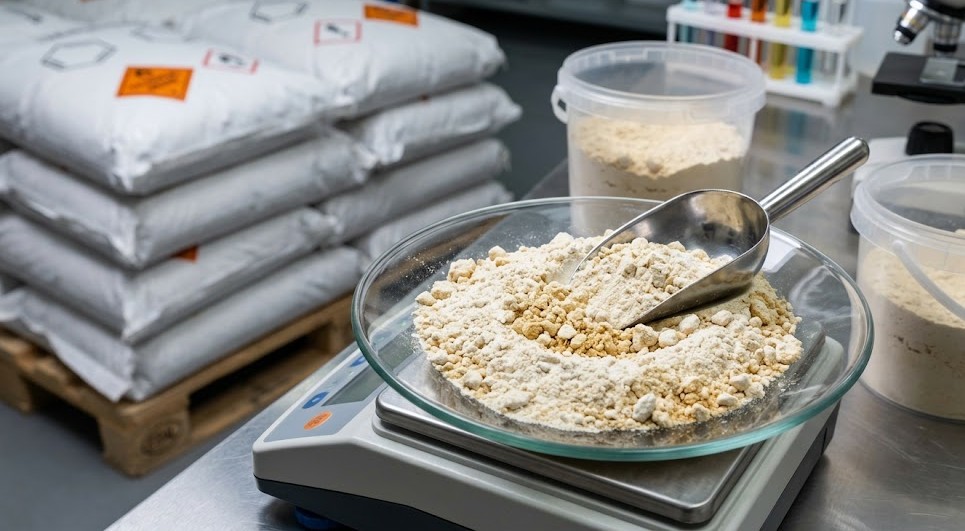
Sodium Dibutyl Naphthalene Sulfonate—frequently referred to in the industry—is a highly efficient, technical-grade anionic surfactant.
1. Chemical Profile and Physical Properties
This compound is synthesized by alkylating naphthalene with butanol, followed by sulfonation and neutralization. “Technical Grade” indicates that the chemical is manufactured for heavy industrial use, offering a highly cost-effective balance of purity and performance without the premium cost of laboratory-grade refining.
| Property | Standard Specification (Technical Grade) | Technical Context |
| Appearance | White to light-yellow powder | Easily dissolves into clear or slightly turbid solutions. |
| Active Matter Content | ≥ 70% | High concentration ensures efficient dosing. |
| pH Value (1% aqueous solution) | 7.0 – 8.5 | Neutral to mildly alkaline; highly compatible with most industrial baths. |
| Solubility | Highly soluble in water | Performs exceptionally well in both cold and hot water systems. |
| Stability | Excellent | Resists degradation in hard water, acidic, and alkaline environments. |
2. Mechanism of Action: How It Works as a Wetting Agent
To understand why this chemical is so valuable, it helps to look at how water behaves. Water naturally has a high surface tension, causing it to bead up on surfaces (like a drop of water on a waxy leaf or synthetic fabric).
When Sodium Dibutyl Naphthalene Sulfonate is introduced to the water, its molecules migrate to the surface. The “water-loving” (hydrophilic) sulfonate head stays in the water, while the “water-repelling” (hydrophobic) butyl-naphthalene tail pushes outward.
This action shatters the water’s surface tension. Instead of beading up, the water immediately spreads out and penetrates the microscopic pores of the solid material. This rapid penetration is what makes it an elite industrial wetting agent.
3. Core Industrial Applications
Because it functions smoothly across a wide range of temperatures and pH levels, Sodium Dibutyl Naphthalene Sulfonate is utilized in several demanding B2B sectors:
Textile Dyeing and Printing
- Rapid Penetration: Used extensively in the scouring (cleaning), bleaching, and dyeing processes of cotton, wool, and synthetic blends.
- Even Coloration: By forcing dye solutions to penetrate fabric fibers instantly and uniformly, it prevents streaks and uneven coloring in the final textile product.
Rubber, Plastics, and Paper Manufacturing
- Emulsification: Acts as a stabilizing emulsifier in the production of synthetic rubber and latex.
- Paper Pulping: Added to paper manufacturing processes to improve the absorbency of the final paper products (e.g., tissue paper, industrial filters).
4. Safety, Handling, and Storage Guidelines
While Sodium Dibutyl Naphthalene Sulfonate is highly stable, proper B2B industrial hygiene must be maintained.
- Personal Protective Equipment (PPE): As a fine technical-grade powder, it can create airborne dust. Workers should wear standard dust masks, protective eyewear, and gloves to prevent mild respiratory or skin irritation.
- Storage Environment: Store in a cool, dry, and well-ventilated warehouse. Keep containers tightly sealed to prevent the powder from absorbing ambient moisture (hygroscopicity).
- Standard Packaging: Typically shipped in 20 kg or 25 kg (44 lbs or 55 lbs) moisture-proof woven bags lined with polyethylene plastic.
- Environmental Impact: While effective, wastewater containing high concentrations of surfactants should be treated in accordance with local municipal environmental regulations before discharge to prevent foaming in local waterways.
