
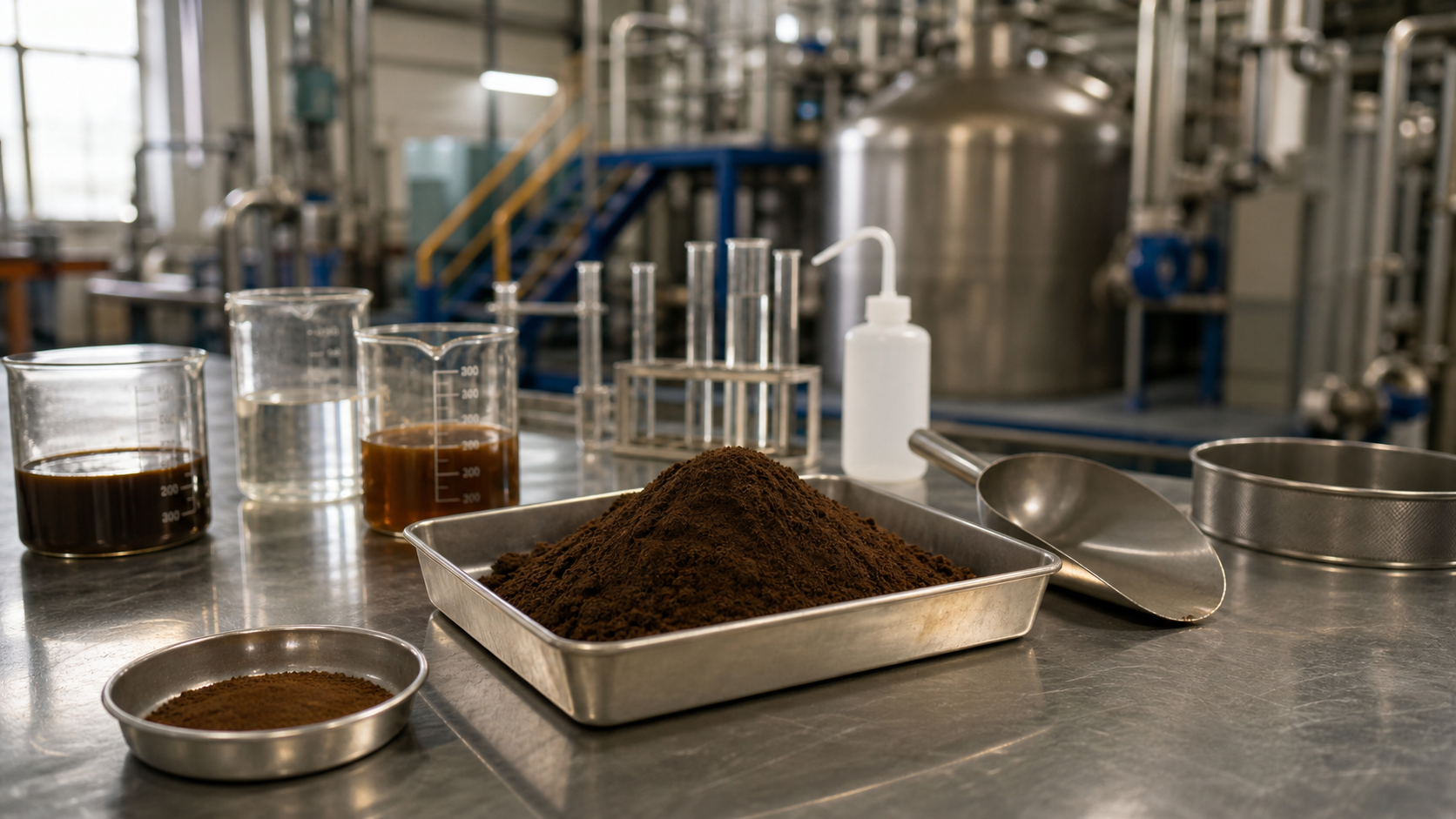
Sodium lignosulfonate is a specific type of lignosulfonate where sodium is the counter-ion. Here’s a brief overview of its properties and uses:
Chemical properties:
- Derived from lignin, a natural polymer found in wood
- Anionic polyelectrolyte
- Water-soluble
- Brownish powder or liquid
Main applications:
- Concrete admixture:
- Water reducer
- Plasticizer
- Improves workability
- Dispersant:
- Used in various industries (ceramics, pesticides, dyes, etc.)
- Helps disperse particles in suspensions
- Emulsifier:
- Used in asphalt emulsions
- Aids in oil recovery
- Leather tanning:
- Helps in the tanning process
Advantages:
Derived from renewable resources
Biodegradable and environmentally friendly
Cost-effective
Versatile with multiple applications
Production process for sodium lignosulfonate typically involves the following steps:
- Raw material preparation:
The primary source is lignin, a byproduct of the paper and pulp industry, specifically from the sulfite pulping process. - Sulfonation:
Lignin is subjected to a sulfonation reaction, usually using sodium sulfite (Na2SO3) under high temperature and pressure. This process introduces sulfonate groups into the lignin structure. - Neutralization:
The sulfonated lignin is then neutralized with sodium hydroxide (NaOH) to form sodium lignosulfonate. - Purification:
The resulting product undergoes various purification steps to remove impurities and adjust properties:- Filtration to remove solid impurities
- Ultrafiltration or other membrane processes to control molecular weight distribution
- Ion exchange to remove excess ions
- Concentration:
The purified solution is concentrated, typically through evaporation. - Drying (optional):
Depending on the desired final form, the concentrated solution may be spray-dried to produce a powder. - Quality control:
The final product is tested for various properties such as pH, solid content, viscosity, and sulfonate content. - Modification (optional):
In some cases, the sodium lignosulfonate may be further modified to enhance specific properties for particular applications.
