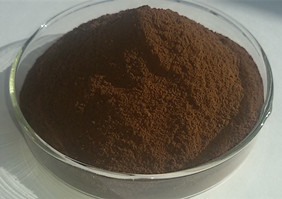
Liquid and powder sodium lignosulfonate can provide related industrial functions, but they create different requirements for transport, storage, dosing, water balance and plant equipment. Selection should be based on total delivered cost and process fit—not on the product form alone.
Liquid versus powder at a glance
| Decision factor | Liquid form | Powder form |
|---|---|---|
| Preparation | Can be metered without on-site powder dissolution | Requires dissolution or dry addition where the process permits |
| Freight | Includes water; compare delivered active-solids cost | Higher active material per shipment, subject to grade composition |
| Storage | Tank, IBC or flexitank handling; protect from freezing and contamination | Dry warehouse and moisture control |
| Dosing | Pump calibration, density and solids basis are important | Feeder accuracy, dust control and dissolution quality are important |
| Water balance | Solution water must be included in the formulation | Dissolution water or process moisture must be considered |
| Plant housekeeping | Spill containment and line flushing | Dust collection and bag handling |
Compare grades on a dry-solids basis
Do not compare one tonne of liquid directly with one tonne of powder. Convert each offer to delivered active or dry solids using the declared solids content, then include freight, packaging, storage, preparation labor, energy, losses and equipment requirements.
Dry solids supplied = product mass × solids fraction. For example, 1,000 kg of a solution at 45% solids contains 450 kg of dry solids. This is a mass-balance example, not an application dosage recommendation.
Quality parameters to align
- Product code and intended industrial grade
- Solid content and reporting basis
- Lignosulfonate content and analytical method
- Water-insoluble matter and filtration requirements
- Reducing sugar, density and any process-critical pH requirement
- Batch COA, SDS, shelf life, packaging and traceability
When liquid form may fit better
Liquid material may suit continuous wet processing, automated pump dosing or facilities that want to avoid powder dissolution. Confirm tank capacity, winter conditions, pump compatibility, recirculation needs, transfer rate and formulation water balance.
When powder form may fit better
Powder may suit long-distance freight, smaller batch use or plants with suitable dry-feeding and dissolution systems. Confirm warehouse humidity, dust controls, dissolution time, solution make-down concentration and operator exposure controls.
Qualification before conversion
- Define the required function and critical finished-product measures.
- Compare current TDS, SDS and representative COA for both candidate grades.
- Convert costs and addition calculations to the same dry-solids basis.
- Run controlled plant trials with consistent raw materials and process settings.
- Review viscosity, dispersion, binding, pumpability, sedimentation or other application-specific results.
- Approve the commercial form only after technical, operational and regulatory review.
For the current liquid Grade One values, see Liquid Sodium Lignosulfonate – Grade One. For documents, samples and industrial selection support, contact info@greenagrochem.com.
