“Sodium naphthalene sulfonate price” is an ambiguous purchasing query. It may refer to a low-molecular-weight sodium naphthalene sulfonate, a naphthalene-sulfonate mixture, or sodium naphthalene sulfonate-formaldehyde condensate sold as SNF. These are not automatically the same product, and a price comparison is unreliable until the chemical identity and intended use are confirmed.
If the requirement is an SNF concrete superplasticizer, use the dedicated SNF superplasticizer price and RFQ guide and review the current SNF product page. This page focuses on resolving nomenclature before a quotation is requested.
Why the product name matters
The words “naphthalene,” “sulfonate,” “sodium salt,” “formaldehyde condensate,” “NNO” and “SNF” are used inconsistently in online listings. A missing word can indicate a different molecular distribution, manufacturing route or application. Abbreviations should never replace the complete product identity in a purchase specification.
Request the supplier’s full chemical description, trade grade, composition statement, supplied form and intended application. Where applicable, confirm identifiers and regulatory information from the current SDS rather than copying a CAS number or molecular formula from an unrelated catalog.
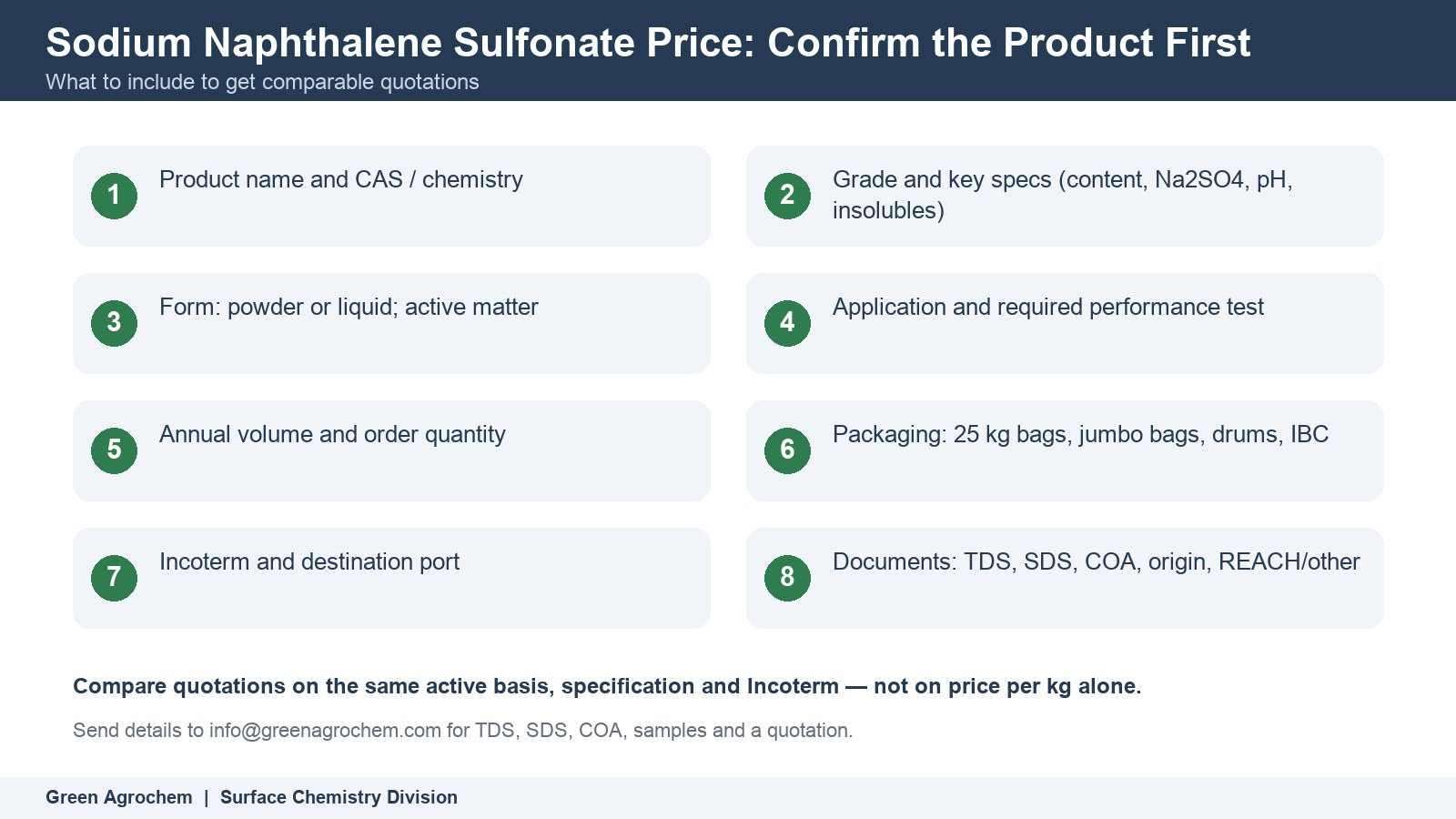
Questions to resolve before asking for price
- Is the requested product a monomeric sulfonate, a condensation product, or a formulated blend?
- Does the requirement include formaldehyde condensation?
- Is the end use concrete, dye or pigment dispersion, pesticide formulation, oilfield use, or another process?
- Is the offer powder, granule or liquid, and what is its stated composition basis?
- Which TDS, SDS and specification revision applies to the offered grade?
- Which test methods define the analytical and application requirements?
Why two similar names can produce different quotations
Price depends on product identity, feedstock and processing as well as physical form and quality controls. Even offers using the same abbreviation may differ in solids or moisture basis, inorganic salt content, molecular distribution, packaging and application performance. The cheapest listing may simply describe a different material.
Normalize all quotations to the same chemical requirement, composition basis, quantity, packaging, Incoterm, currency and destination. Include freight, duty, terminal charges, inland delivery and handling when comparing landed cost.
Specification and evidence checklist
- Exact product and grade name
- Supplier chemical description and intended application
- Current TDS and SDS revision
- Representative COA and lot COA requirement
- Solids or moisture basis and relevant analytical limits
- Test methods, units and whether values are limits or typical results
- Packaging, net weight, shelf-life statement and storage conditions
- Traceability and change-notification procedure
Application data are not product identity
A reported water-reduction percentage, dispersion grade or addition level cannot prove which chemistry is being offered. Such figures are application results and require the substrate, control, dosage basis, conditions and test method. Do not convert them into generic product specifications.
Where the supplier provides an addition level, present it only as a supplier-recommended starting trial range supported by the current technical document for that grade. State whether the basis is as supplied, dry solids, active matter, cementitious material or total formulation. Validate it in the buyer’s actual process.
Separate application routes
- Concrete SNF: evaluate cement compatibility, flow, retention, air, setting and strength through controlled trial mixes.
- NNO/MF formulation dispersants: dye, pigment and pesticide-formulation selection belongs to the GreenAgrochem.net surface-and-interface technology division.
- Other industrial uses: define the substrate and acceptance test before accepting an “equivalent” grade.
RFQ wording
An RFQ should state: “Please quote the exact product described in the attached specification and confirm the complete chemical description, grade, supplied form, composition basis, test methods and intended application.” Add quantity, packaging, destination, Incoterm, quotation validity and document requirements.
For identity review and a comparable quotation, contact info@greenagrochem.com with the intended application and available specification.
