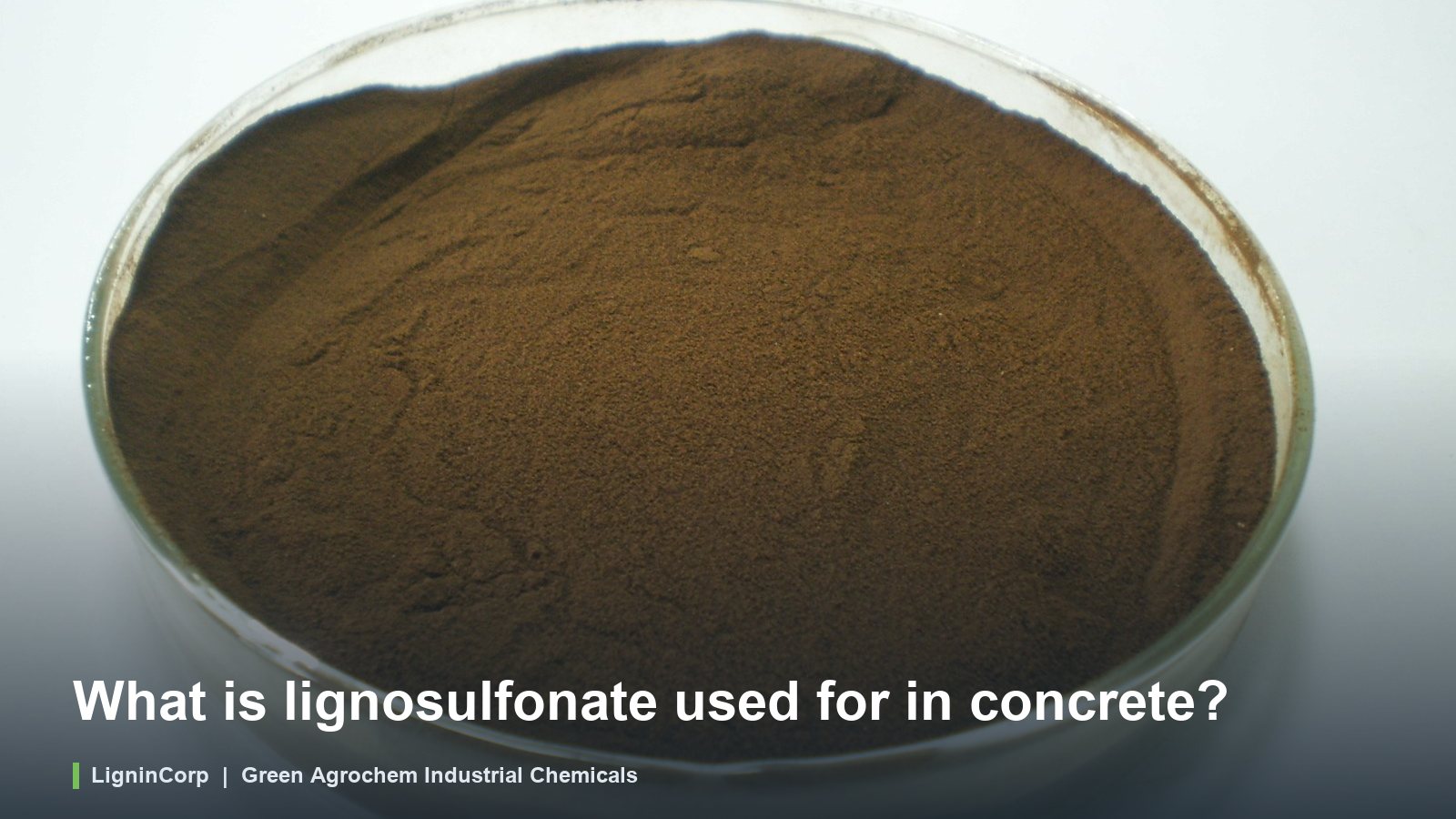
Lignosulfonates, including sodium lignosulfonate, have several important uses in the concrete industry:
- Plasticizer and water reducer:
- Lignosulfonates act as effective plasticizers and water reducers in concrete mixes.
- They help disperse cement particles, reduce the amount of water needed to achieve a desired workability, and improve the flow properties of the concrete.
- This can lead to enhanced compressive strength, reduced porosity, and improved durability of the hardened concrete.
- Retarder:
- Lignosulfonates can function as set retarders in concrete, slowing down the hydration and setting process.
- This allows more time for concrete placement, finishing, and transportation, especially in hot weather conditions.
- Retardation of the setting time can also help reduce the risk of thermal cracking in large concrete pours.
- Admixture:
- Lignosulfonates are commonly used as admixtures in concrete, either as stand-alone admixtures or in combination with other admixtures.
- They can be added to improve various concrete properties, such as workability, strength, and durability.
- Dispersant:
- Lignosulfonates act as effective dispersants, helping to disperse and stabilize cement particles, mineral admixtures (such as fly ash or slag), and other concrete additives.
- This can improve the homogeneity and consistency of the concrete mix, leading to better overall performance.
- Concrete production efficiency:
- The use of lignosulfonates in concrete can improve the efficiency of concrete production and application.
- By reducing the water content and improving workability, lignosulfonates can help decrease the energy required for mixing, pumping, and placing the concrete.
- Sustainability:
- Lignosulfonates are derived from renewable, plant-based sources (lignin), making them a more environmentally friendly alternative to some synthetic admixtures.
- Their use in concrete can contribute to the overall sustainability of concrete construction projects.
