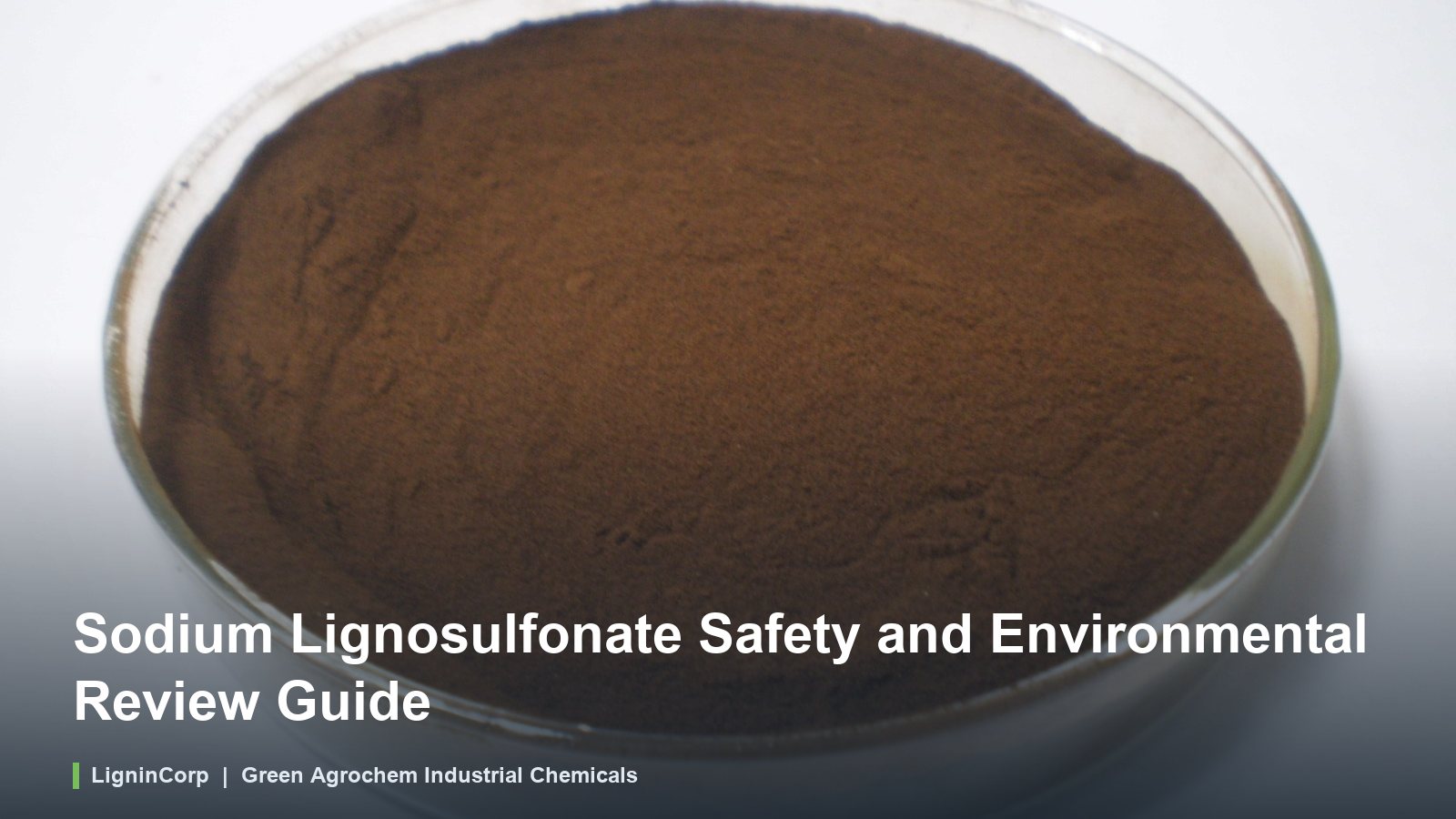
Sodium lignosulfonate safety must be assessed from the current SDS for the exact commercial grade. Products can differ in moisture, dustiness, pH, residual inorganics, impurities and physical form; a family name is not a complete hazard classification.
Correction of the Former Page
| Former statement | Correction | Required evidence |
|---|---|---|
| Sodium lignosulfonate is a strong oxidizing agent. | This was unsupported and chemically misleading. Do not classify the product as an oxidizer without the exact-grade SDS and applicable classification criteria. | Current supplier SDS, especially hazard identification, stability/reactivity and transport sections. |
| It reacts to form sodium peroxide. | No source or defined reaction was provided; this claim has been removed as factual guidance. | A documented reaction pathway and conditions would be required. |
| It causes cancer, reproductive problems or other chronic disease. | The former page supplied no substance/grade identification, study, exposure route, dose or regulatory classification. These claims must not be generalized. | Exact-grade toxicology data and authoritative jurisdiction-specific classification. |
| Manufacture necessarily releases harmful fumes and use contaminates soil and groundwater. | Manufacturing emissions and environmental release depend on process controls, concentration, wastewater treatment, site permits and actual discharge. | Site-specific emissions/effluent data, permits and environmental assessment. |
Practical Workplace Controls
- Review the current SDS before receiving or using the material and train workers for the supplied form.
- Control airborne dust during bag opening, transfer, weighing and mixing through closed handling or suitable local exhaust where required.
- Select eye, skin and respiratory protection from the SDS and workplace risk assessment; do not prescribe one respirator for every task.
- Avoid creating dust clouds, keep containers closed and maintain good housekeeping using methods that do not re-aerosolize powder.
- Provide appropriate eyewash/washing facilities and follow the exact SDS for first aid, spill response and incompatibilities.
- Assess wet floors and spills as slip hazards and prevent uncontrolled entry into drains or surface water.
Environmental Review
“Lignin-derived” does not by itself prove biodegradability, non-toxicity or environmental safety. Review grade-specific biodegradation, oxygen-demand, aquatic, impurity and wastewater-treatment information when relevant. Disposal and discharge must follow the facility permit, SDS and local requirements. Product use in dust control, agriculture, feed or other regulated applications requires an application- and destination-specific review.
Documents Buyers Should Request
- Current TDS and SDS carrying the exact product code and revision date.
- Representative and shipment COA with relevant specification tests.
- Composition or impurity information needed for the intended process and jurisdiction.
- Transport classification, packaging, storage and shelf-life instructions.
- Regulatory or application-suitability statements only where the supplier can document them.
For exact-grade documents and industrial qualification, use the Lignosulfonate Supplier Evaluation Guide or contact info@greenagrochem.com.
