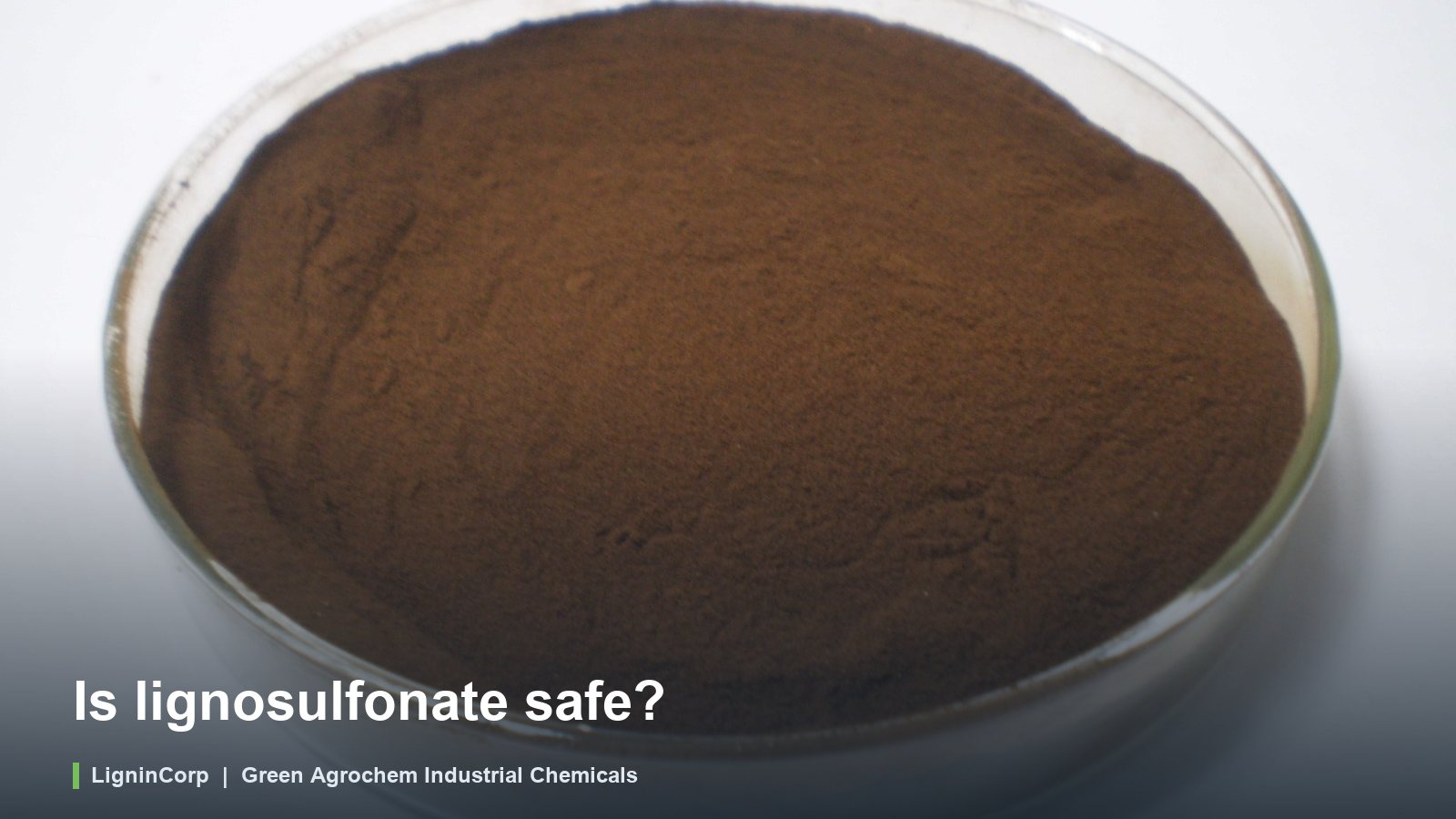
As industrial manufacturing increasingly transitions toward sustainable, bio-based chemistries, assessing the safety and environmental footprints of raw materials is vital. Lignosulfonates are highly versatile water-soluble anionic polymers derived from the natural lignin found in woody plant tissues.
For a general introduction, see what lignosulfonate is and how it is made.
1. Toxicological Profile and Human Safety
Lignosulfonates are globally recognized as low-toxicity, non-hazardous substances under standard industrial handling conditions. Unlike petroleum-derived synthetic polymers, their natural plant origin results in exceptional biological compatibility.
- Acute Oral Toxicity: Animal model assessments establish that sodium and calcium lignosulfonates exhibit a very high LD₅₀ threshold, typically ranging from 5,000 mg/kg to 10,000 mg/kg of body weight. This places the compound in the lowest acute toxicity classification, indicating a minimal hazard profile if accidentally ingested in industrial environments.
- Dermal Absorptivity: The high molecular weight of lignosulfonate polymers (ranging from 1,000 to 140,000 Da) prevents them from readily penetrating the skin barrier. Dermal LD₅₀ values exceed 2,000 mg/kg, demonstrating that the substance is non-hazardous upon skin contact.
- Carcinogenicity and Systemic Risks: Lignosulfonates are not classified as carcinogens, mutagens, or reproductive hazards by leading international regulatory bodies, including IARC, NTP, and OSHA.
2. Workplace Handling and Physical Hazards
While chemically benign, the physical format of commercial lignosulfonates introduces standard occupational hygiene requirements that production facilities must manage:
- Inhalation and Dust Irritation: In dry, free-flowing powder form, excessive airborne concentrations can act as a mechanical irritant to the respiratory tract, nose, and throat. Proper local exhaust ventilation or personal protective equipment (such as particulate masks) is recommended in bulk blending areas.
- Dermal and Ocular Effects: Direct contact with concentrated solutions or airborne dust may cause minor mechanical eye irritation or temporary skin dryness in sensitive individuals. Standard industrial safety goggles and protective gloves prevent these mild localized reactions.
- Slip and Spill Hazards: Due to their high water solubility and natural binding properties, spilled lignosulfonates become exceptionally slick when wet. Production floors must be kept dry, and dry vacuuming or absorbent sweep methods should be used to clean up dry powder spills before washing with water.
- Combustible Dust Risks: Like many organic macromolecular powders (such as starch or sugar), high concentrations of suspended lignosulfonate dust in enclosed spaces can pose a dust explosion hazard if exposed to an open flame or high-energy ignition source.
3. Ecological and Environmental Impact
From an environmental standpoint, lignosulfonates present a highly sustainable alternative to synthetic, non-biodegradable surfactants and resins.
- Biodegradability: Derived from a renewable timber resource, lignosulfonates naturally break down over time through microbial action in soil and water systems, preventing long-term chemical persistence or bioaccumulation in the food chain.
- Biological Oxygen Demand (BOD): Because they are biodegradable organic complexes, if a massive, uncontrolled quantity of concentrated liquid lignosulfonate enters a closed waterway, its decomposition process will consume dissolved oxygen. This can temporarily elevate the system’s Biological Oxygen Demand, potentially causing localized oxygen depletion that impacts aquatic organisms.
- Acidity Considerations: Concentrated lignosulfonate solutions are slightly acidic. While beneficial for specific soil remediation projects, large unmanaged discharges can cause temporary localized shifts in the pH of sensitive aquatic habitats.
4. Global Regulatory Approval Matrix
The safety of lignosulfonates is highlighted by their broad clearance for sensitive, consumer-adjacent commercial applications:
| Regulatory Body | Application Scope / Clearance Status |
| US FDA (Food & Drug Administration) | Generally Recognized as Safe (GRAS) for specific indirect food contact, animal feed pellet binders, and packaging materials. |
| EU REACH | Approved for diverse industrial processing formulations with low ecotoxicity requirements. |
| Global Transport (IMDG / IATA / ADR) | Non-regulated; classified as non-hazardous cargo for international road, sea, and air logistics. |
