
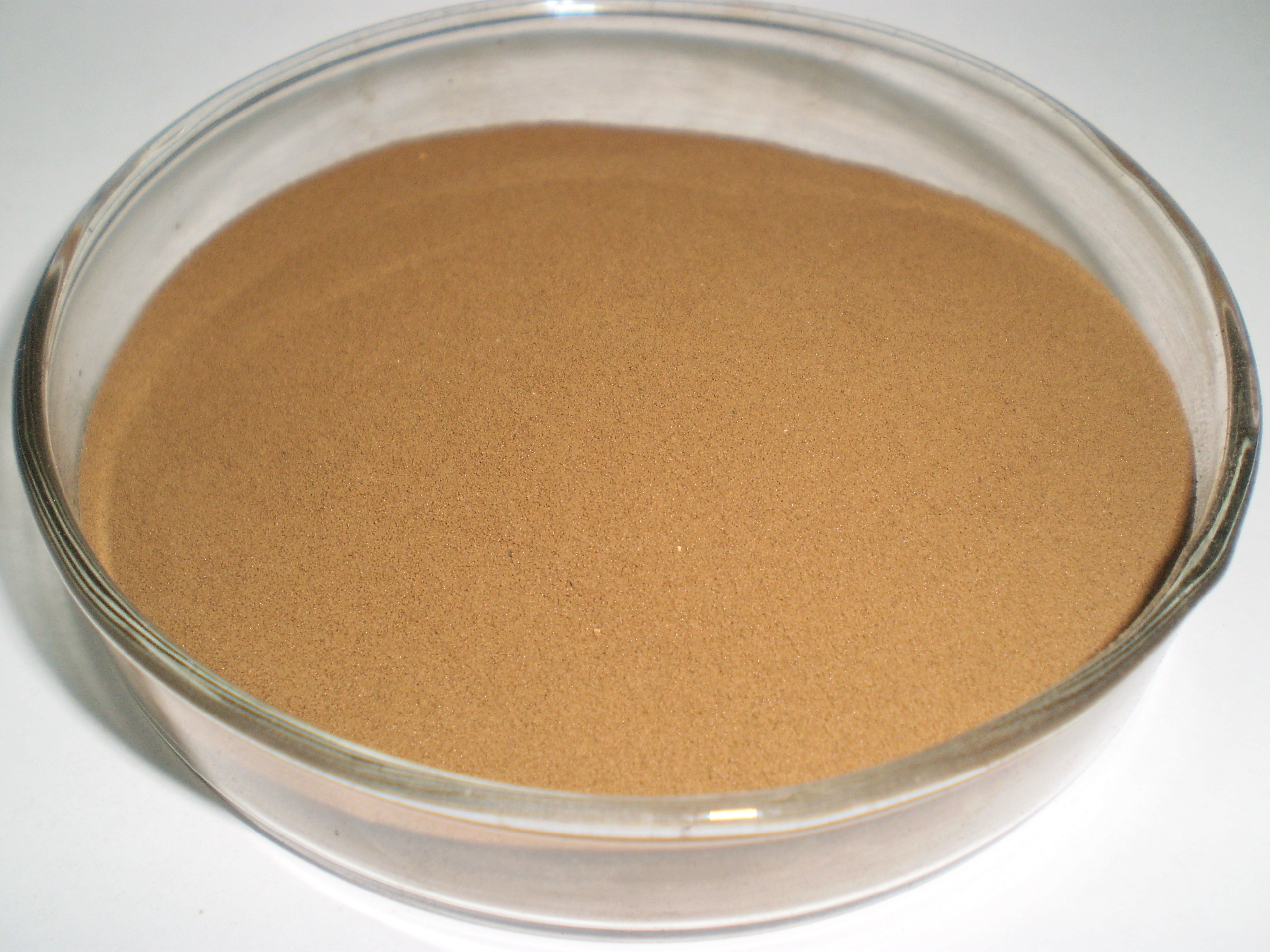
Lignosulfonate water reducers are conventional concrete admixture components used to disperse cement particles, improve workability and, where the mix permits, reduce water at a selected consistency. Their behavior is not defined by one universal percentage: cement chemistry, lignosulfonate grade, active-solids dosage, temperature, supplementary cementitious materials and other admixtures all influence the result.
This guide explains practical selection and testing. For current commercial grades, packaging, samples and lot-specific documentation, review LigninCorp’s sodium lignosulfonate and calcium lignosulfonate product pages.
What is a lignosulfonate water reducer?
Lignosulfonates are water-soluble, anionic polymers commonly obtained from sulfite pulping streams and subsequently refined or modified for different applications. Sodium and calcium lignosulfonates are widely evaluated in cementitious systems. The cation alone does not determine performance; molecular-weight distribution, sulfonation, reducing sugars, insolubles, moisture or solids, and batch consistency also matter.
How dispersion works in cement paste
Lignosulfonate molecules can adsorb on cement-particle surfaces. The resulting change in surface charge and particle interaction helps break down part of the flocculated structure, releasing water trapped within flocs. Depending on the formulation, this may improve workability at constant water or permit some water reduction while maintaining a selected slump or flow.
Lignosulfonates may also modify early hydration and setting. The magnitude is formulation-dependent and must be measured rather than assumed. Sensitive cements, unsuitable dosage, low temperature, reducing-sugar variation and interactions with other admixtures can increase retardation.
Where lignosulfonate systems are commonly evaluated
- general ready-mix and site-mixed concrete;
- mortar, masonry and selected dry-mix products;
- concrete requiring conventional plasticizing or controlled set modification;
- blended admixture packages where lignosulfonate supports dispersion, set control or formulation economics;
- cementitious grouts and selected gypsum systems after compatibility testing.
Grade and specification checks
| Item | Why it matters |
|---|---|
| Moisture or liquid solids | Allows dosage comparison on an active-solids basis and correct batch-water accounting. |
| pH and appearance | Useful for product identity and routine batch-consistency checks. |
| Reducing sugars | Can influence hydration and setting response. |
| Water insolubles | Relevant to dissolution, filtration and dosing equipment. |
| Chloride and alkali contribution | Must be assessed against the project specification and applicable standard. |
| Density for liquids | Needed for mass-volume conversion and metering control. |
Recommended trial procedure
Only where the current TDS for the exact supplied grade provides dosage guidance should it be presented as a supplier-recommended starting trial range, with the calculation basis and document revision stated; it is not a guaranteed production setting. Normalize liquid and powder comparisons to active solids, then qualify the material with the actual cement, aggregates, supplementary cementitious materials, water and admixture package.
- Prepare an untreated control and, where supported by the exact grade’s current TDS, several trial levels within that documented starting range.
- Keep total water and the addition sequence controlled; subtract carrier water from liquid admixtures.
- Measure initial and time-dependent slump or flow, air content, unit weight and setting time.
- Observe bleeding, segregation, finishing, pump response and surface condition.
- Test early and specified-age strength, plus durability properties required for the exposure class.
- Confirm the selected formulation in a controlled plant batch before routine use.
Lignosulfonate compared with SNF and PCE
Lignosulfonate, sulfonated naphthalene formaldehyde (SNF) and polycarboxylate ether (PCE) are not interchangeable solely on product mass. Lignosulfonates are generally considered conventional water-reducing and set-modifying components, while SNF and PCE are commonly selected when higher dispersion is required. Actual performance, cost-in-use and compatibility should be compared at the target workability, water content and strength—not by a generic percentage table. For higher-range requirements, see the SNF superplasticizer product page.
Technical limits and precautions
- Overdosage can cause excessive retardation, altered air content or delayed finishing.
- Incidental air entrainment is not evidence of a compliant freeze-thaw air-void system.
- Strength or durability improvement is not automatic; it depends on the achieved water reduction, curing and the complete mix design.
- Compatibility with air entrainers, accelerators, retarders, SNF and PCE systems must be tested.
- Environmental and safety claims require product-specific evidence; consult the current SDS and applicable regulations.
Documents to request before approval
Request the current TDS and SDS, a representative sample, and a lot-specific COA. Confirm specification limits, storage conditions, shelf life and test methods with the supplier. For a broader mix-design workflow, see the sodium lignosulfonate concrete testing guide. For technical or commercial questions, contact info@greenagrochem.com.
