
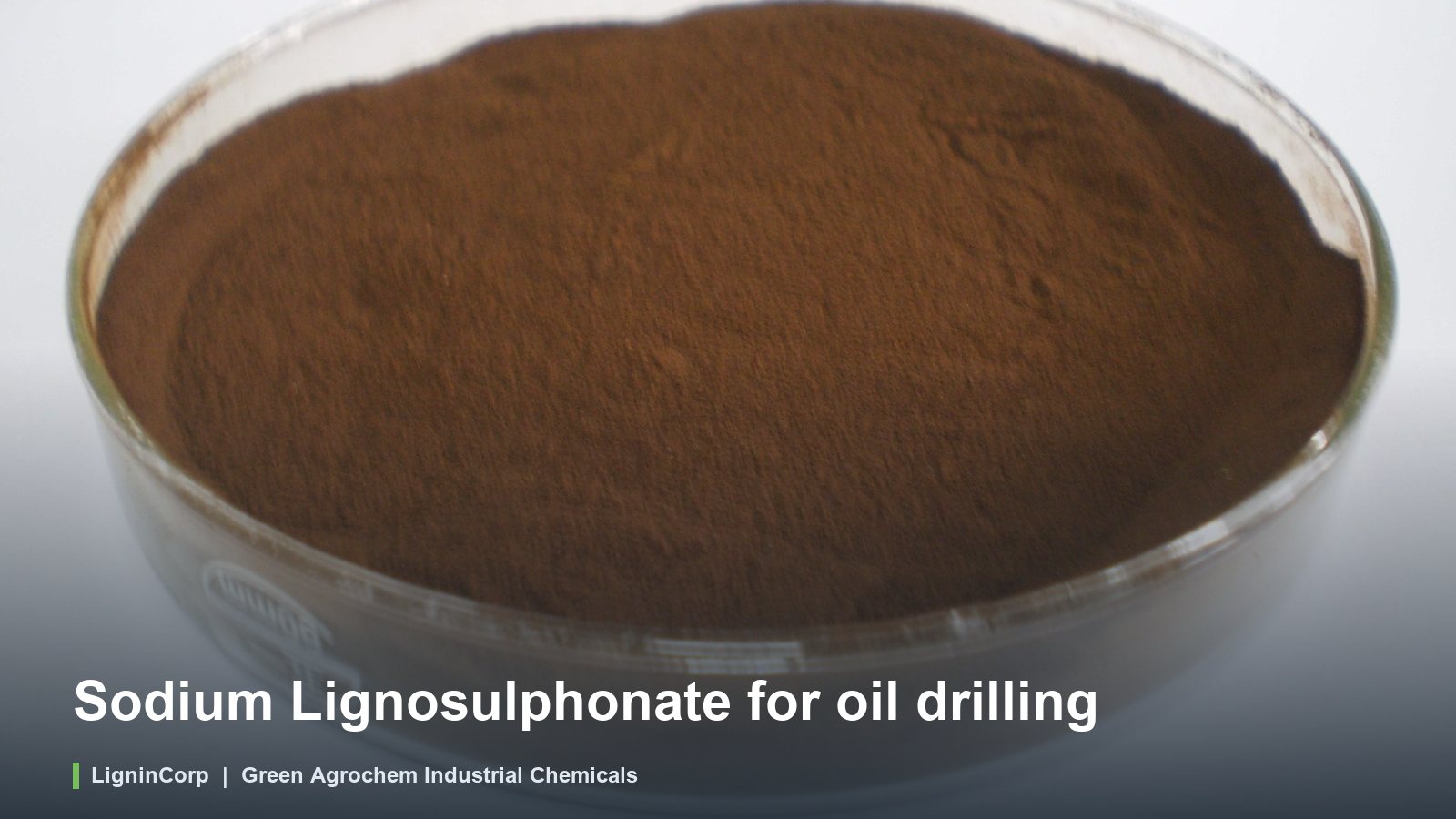
Sodium lignosulfonate is an anionic polymer from sulfite wood pulping, used in water-based drilling fluids as a thinner (deflocculant). Our Grade One TDS lists it as a viscosity reducer and thinner for oil-well drilling mud. It also helps reduce fluid loss and keeps solids dispersed.
How It Works in Drilling Mud
1. Viscosity Control and Deflocculation
Clay particles in the mud, especially from reactive shales, tend to flocculate and raise the viscosity and gel strength. Sodium lignosulfonate adsorbs on the edges of bentonite and drilled clay particles and gives them a negative charge, so they repel each other. The mud stays thinner and easier to pump, which lowers pump pressure and helps keep cuttings moving.
2. Fluid Loss
Well-dispersed clay packs into a thinner, less permeable filter cake on the wellbore wall, which reduces the amount of filtrate lost to the formation. For tight fluid-loss targets it is normally used together with dedicated fluid-loss polymers.
3. Shale Stability
By keeping clay dispersed and the filter cake thin, it can help in shale sections, but it is not an inhibitor on its own. Reactive shales usually need an inhibitive system such as potassium chloride or polymer muds.
Sodium vs Chrome Lignosulfonate
Sodium lignosulfonate is used in fresh-water and moderate-temperature muds. For hotter wells and higher solids, chrome or ferrochrome lignosulfonate is the usual choice, and chrome-free modified lignosulfonates are used where chromium is restricted. See chrome lignosulfonate and the screening guide sodium lignosulfonate in oil and gas.
Laboratory Tests Before Field Use
There is no fixed dosage: the right amount depends on mud weight, solids, salinity and temperature. Build a lab test series at several concentrations and measure the properties in API RP 13B-1 (field testing of water-based drilling fluids):
| Test | What it shows |
|---|---|
| Marsh funnel viscosity | Quick check of overall thinning |
| Rheology on a rotational viscometer: plastic viscosity, yield point, 10-second and 10-minute gel strengths | Whether flocculation is controlled without over-thinning |
| API filtrate (30 minutes, 100 psi) | Fluid loss and filter-cake quality |
| pH | Lignosulfonate thinners are normally run in alkaline muds; record pH at each step |
| Hot-roll aging, then repeat the tests | Whether the effect holds at the expected well temperature |
In the lab, a 350 ml sample is the usual “lab barrel”: 1 g added to 350 ml corresponds to 1 lb per barrel in the field.
Other Oilfield Uses
- Emulsion support: it adsorbs at oil-water interfaces and can help stabilise emulsion muds.
- Well cementing: as a dispersant and retarder in cement slurries. Calcium lignosulfonate is more common here; see lignosulfonate cement retarder for oil-well cementing.
Frequently Asked Questions
What does sodium lignosulfonate do in drilling mud?
It thins the mud by dispersing clay particles, which lowers viscosity and gel strength. It also helps build a thinner filter cake and reduce fluid loss.
How is a lignosulfonate mud thinner tested?
With the API RP 13B-1 tests for water-based muds: funnel viscosity, rheology (plastic viscosity, yield point, gel strengths), API filtrate and pH, before and after hot-roll aging.
What is the difference between sodium and chrome lignosulfonate in drilling?
Sodium lignosulfonate suits fresh-water, moderate-temperature muds. Chrome or ferrochrome lignosulfonate is used for hotter wells and higher solids; chrome-free products are used where chromium is restricted.
What dosage of sodium lignosulfonate is used in drilling mud?
There is no fixed dosage. It depends on mud weight, solids, salinity and temperature, so it is set by a lab test series, measured in lb per barrel.
