
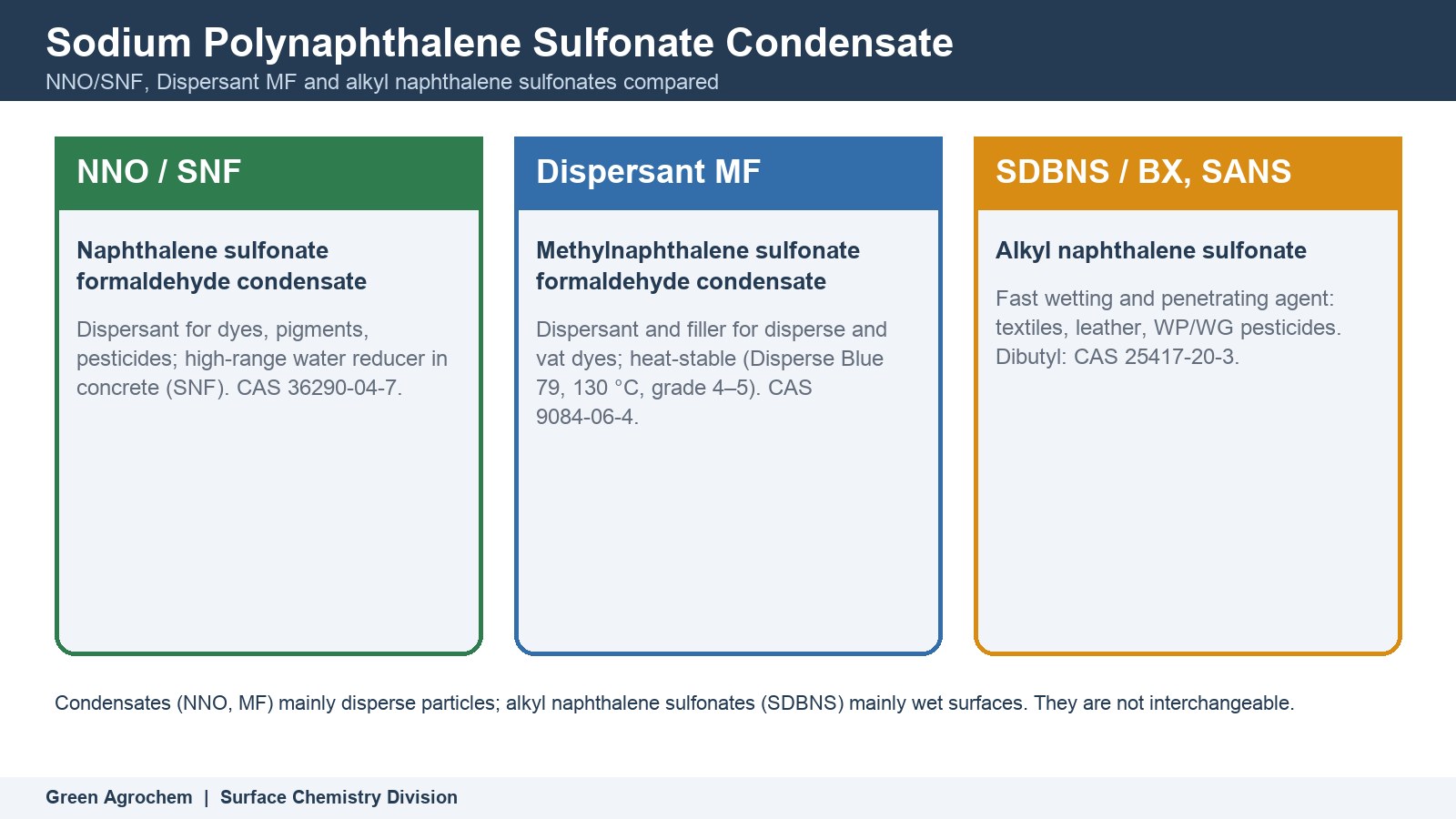
Sodium polynaphthalene sulfonate condensate is one of several names for sodium naphthalene sulfonate formaldehyde condensate, the polymer sold as SNF or PNS. The many names cause confusion when comparing quotations and safety data sheets, so this page sets out the names, the identifiers and the checks that confirm you are comparing the same product. The chemistry is explained on polynaphthalene sulfonate (PNS).
Names Used for the Same Product
| Name | Where you will see it |
|---|---|
| Sodium polynaphthalene sulfonate (condensate) | SDS and chemical catalogues |
| Sodium naphthalene sulfonate formaldehyde condensate | Most technical data sheets |
| SNF, PNS, NSF, BNS | Concrete admixture trade |
| Dispersant NNO | Dye and pigment trade (dispersant grades) |
| Sodium polynaphthalenesulfonate | Pharmacopeia-style and research usage |
Identifiers
- Our SNF superplasticizer grades: CAS 36290-04-7, HS 3824401000.
- Dispersant NNO grades for dyes are usually documented under CAS 9084-06-4.
- Different suppliers may use either number for similar products, so compare the full chemical name and the specification, not only the CAS number.
Grades
| Grade | Sodium sulfate (Na2SO4) | Chloride (Cl–) | Cement paste fluidity | Solids | pH |
|---|---|---|---|---|---|
| SNF-5 (GAC-SNF-5) | 5% max | 0.4% max | 220 mm min | 91% min | 7 – 9 |
| SNF-10 (GAC-SNF-10) | 10% max | 0.4% max | 220 mm min | 91% min | 7 – 9 |
| SNF-18 (GAC-SNF-18) | 18% max | 0.5% max | 210 mm min | 91% min | 7 – 9 |
| SNF-20 (GAC-SNF-20) | 20% max | 0.5% max | 210 mm min | 91% min | 7 – 9 |
| Powder Grade, high solids (GAC-SNF-P) | 10% max | Below 200 ppm | Not listed | 95% min | 6.5 – 8.5 (1:10) |
Checks Before Comparing Offers
- Same chemical name and grade on the TDS and SDS.
- Same sodium sulfate and chloride limits.
- Same fluidity or water-reduction test method.
- A sample tested in your own cement or formulation.
Buying guide: poly naphthalene sulfonate (PNS) grades and buying guide. Grades and quotations: SNF product page.
Frequently Asked Questions
Is sodium polynaphthalene sulfonate the same as SNF?
Yes. Sodium polynaphthalene sulfonate condensate, SNF, PNS and NSF all name the sodium naphthalene sulfonate formaldehyde condensate.
What is the CAS number of sodium polynaphthalene sulfonate?
Our superplasticizer grades are supplied under CAS 36290-04-7; dye-dispersant NNO grades are usually documented under CAS 9084-06-4. Compare the full name and specification as well.
What is sodium polynaphthalene sulfonate used for?
Mainly as a concrete superplasticizer, and as a dispersant for cement, gypsum, dyes and pigments.
