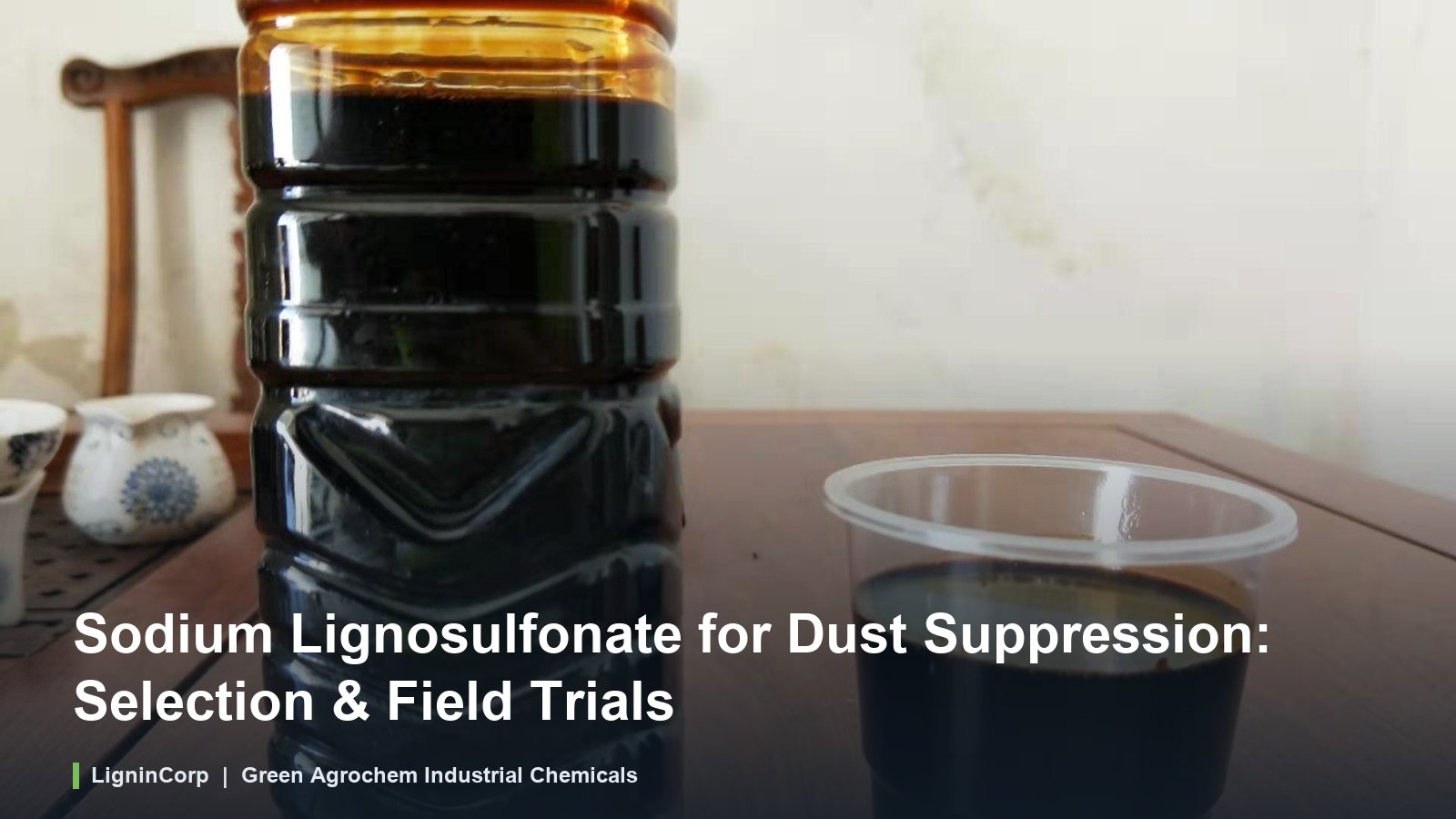
Sodium lignosulfonate is evaluated as a water-soluble binder for controlling fugitive dust on unpaved industrial roads, mine haul routes, construction access roads, stockpile working areas and other compatible mineral surfaces. After application, the lignosulfonate solution wets fine particles and helps consolidate them within the surface layer as water is lost. Field performance depends on the product grade, solution solids, aggregate grading, surface preparation, traffic, rainfall, drainage and application method.
Where sodium lignosulfonate may be considered
- Mine and quarry roads: controlling fines generated by haul traffic on properly maintained unsealed surfaces.
- Industrial and construction access roads: reducing routine watering demand where the surface and drainage system are suitable.
- Material handling areas: treating selected working surfaces around aggregate, mineral and bulk-solid operations.
- Temporary traffic routes: supporting short- or medium-term dust-management programmes subject to site controls and reapplication criteria.
It should not be assumed to suit every soil, ore, climate or environmental setting. Highly plastic clay, poorly drained ground, surfaces exposed to concentrated runoff, very coarse material with insufficient fines, and locations with strict discharge constraints require particular care.
How the treatment works
The solution distributes through the prepared surface and interacts with mineral fines. As moisture decreases, the binder contributes cohesion between particles and can reduce their tendency to become airborne under traffic. The result is a treated wearing course rather than a permanent pavement. Abrasion, rainfall, grading, snow removal, new aggregate and traffic loading progressively disturb the treated layer, so inspection and maintenance remain necessary.
Product form and selection
Both liquid and powder forms can be supplied. A liquid grade can simplify dilution and dosing, while powder may be preferable for long-distance transport or sites equipped for controlled dissolution. Compare offers on an equivalent dry-solids basis instead of comparing delivered mass alone.
- Sodium lignosulfonate dust-control liquid for sites with liquid storage, transfer and spray equipment.
- Sodium lignosulfonate dust-control powder for controlled on-site solution preparation.
- Sodium lignosulfonate product overview for grade documentation and procurement comparison.
Before qualification, review the current TDS, SDS and batch COA. Relevant acceptance items may include product identity, solids or moisture basis, pH test method, insoluble matter, density for liquids, dissolution behaviour for powders and any site-specific impurity limits. Values must be tied to the exact offered grade and current document revision.
Surface preparation and application sequence
A successful programme begins with drainage and road maintenance. Correct potholes, rutting and crossfall defects before treatment. Grade the wearing course to distribute fines, remove loose oversize material where necessary and establish a consistent moisture condition. Apply the prepared solution uniformly with calibrated equipment, avoiding ponding and uncontrolled runoff. Multi-pass application may improve distribution on some surfaces, but the sequence should be determined by the field trial.
Allow the treated layer to cure under controlled access until it can carry the intended traffic without pickup or deformation. The site procedure should define weather limits, traffic control, spill response, equipment cleaning and criteria for postponing application.
No universal dosage or service interval
A fixed concentration, application rate, coverage figure or service life cannot be recommended without an exact product document and site evidence. Any supplier-recommended starting trial range must state whether it is based on as-supplied solution, dry solids, treated area or treated material mass. Final settings should be established using the actual aggregate, equipment, climate and traffic conditions.
Recommended field-trial design
- Characterise the surface: record grading, fines content, moisture, drainage, road geometry and existing defects.
- Define the control: retain an untreated or current-practice section exposed to comparable traffic.
- Prepare trial sections: test selected application levels and sequences with the same calibrated spray equipment.
- Measure initial behaviour: observe wetting, penetration, runoff, surface pickup and curing.
- Monitor service: document visible dust, surface loss, corrugation, rutting, skid condition and maintenance interventions after traffic and weather events.
- Set action limits: define when grading, spot repair or reapplication is required and record the material used per treated area.
Photographs taken from fixed locations, traffic counts, weather records and a repeatable dust-monitoring method make comparisons more useful. The trial report should identify the product batch, dilution basis, application equipment and every maintenance action.
Environmental, safety and operational controls
Do not rely on generic claims such as “non-toxic,” “environmentally safe” or “biodegradable” when approving a product or site procedure. Review the current SDS, local discharge requirements, watercourse setbacks, soil and groundwater sensitivity, worker exposure controls and any relevant permit conditions. Prevent concentrated solution from entering drains or surface water, and manage overspray, storage and spills through the site environmental plan.
Procurement and total applied cost
Evaluate landed cost per unit of dry solids together with dilution water, storage, handling, application labour, equipment time, traffic disruption and expected maintenance. A lower delivered price does not necessarily produce a lower treated-area cost if solids content, dilution needs or reapplication frequency differ.
Related industrial guidance
See the dust suppression and road stabilization application guide for programme-level planning. For a technical review, send the surface description, climate, traffic, available equipment, required documents and target test method to info@greenagrochem.com.
