
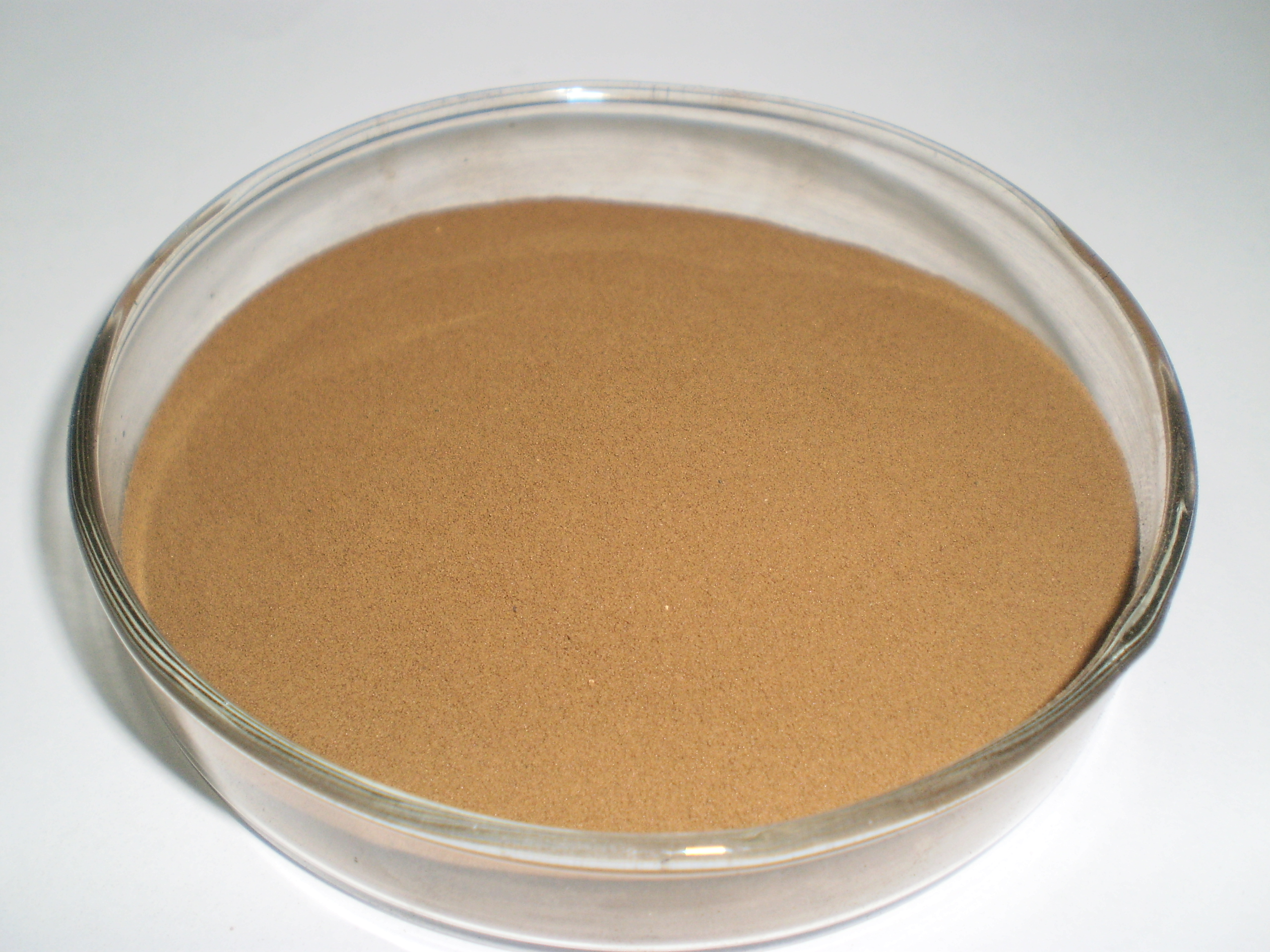
Cement grouts must flow into small spaces, stay pumpable long enough and not separate. Calcium lignosulfonate helps with the first two: it disperses the cement so less water is needed, and it delays set. Bleeding is the property to watch. This page covers dosage, tests and the bleeding trade-off.
Uses
- Grouting of ducts, anchors and bolts.
- Filling voids and cracks.
- Preplaced-aggregate concrete.
- Machine base and general-purpose grouts.
Dosage
| Parameter | Construction Grade (GAC-CaLS-Construction), TDS Rev. 2.0 |
|---|---|
| Form | Light brown powder |
| Bulk density | 0.8 g/cm³ |
| Moisture | 5% max |
| pH (5% solution) | 4–6 |
| Recommended dosage | 0.20–0.30% by weight of cement; higher dosages may retard set beyond specified limits |
| Water-demand reduction | Up to 12% |
| Packaging | 25 kg woven bags with PE liner; 500 kg or 600 kg jumbo bags |
| Shelf life | 12 months |
Typical values from the current TDS. Each lot ships with a COA.
Grouts are mostly cement and water, so dose in percent of cement and start at the low end of the TDS range. Lower water from dispersion also reduces bleeding; too much retardation can increase the time the grout has to bleed.
Key Tests
| Property | Method | Why |
|---|---|---|
| Flow | Flow cone, ASTM C939 or EN 445 | Pumpability and filling |
| Bleeding and expansion | ASTM C940 or EN 445 | Separation in the duct or void |
| Setting time | Vicat or penetration method | Pumping window |
| Strength | Cubes or cylinders per project spec | Load transfer |
Trial Plan
- Fix the water-cement ratio target and mix a control grout.
- Add lignosulfonate at two doses and adjust water to reach the target flow time.
- Measure bleeding and expansion over the test period.
- Measure set and strength.
- Pick the dose with the lowest water at target flow and acceptable bleeding.
Frequently Asked Questions
What does calcium lignosulfonate do in cement grout?
It disperses the cement so the grout flows at a lower water-cement ratio, and it delays set, which extends pumping time.
How is grout flow measured?
Commonly by flow cone: ASTM C939 in the US, or the cone method in EN 445 for prestressing grout.
How is bleeding measured?
ASTM C940 covers expansion and bleeding of fresh grout; EN 445 includes bleeding tests for prestressing grout.
Can it be used in prestressing duct grout?
Only in a grout system tested to the project specification, for example EN 447. Bleeding and set limits there are strict, so the full formula must be qualified.
Samples and Documents
Send the cement type, mix design, target slump or setting time, and the test standard you work to, to info@greenagrochem.com or use the contact form.
Related: mortar and plaster · set retarder · all construction uses
