Choosing a sodium lignosulfonate supplier requires more than comparing price, CAS number or a generic specification sheet. Sodium lignosulfonate is a heterogeneous lignin-derived material, and commercially important properties can vary with raw material, pulping source, separation, concentration, drying and quality control. The best supplier is the one that can consistently meet the requirements demonstrated in your application trial.
This industrial buyer’s guide covers supplier qualification, sample approval, documentation, manufacturing consistency and logistics. For an application-specific discussion, contact info@greenagrochem.com.
Start with the intended application
Before asking suppliers for a quotation, define what the product must do. Concrete admixture, ceramic slurry, mineral dispersion, granulation, dust-control binder and drilling-fluid uses do not necessarily require the same grade. Tell the supplier the substrate, water chemistry, pH, solids loading, process temperature, mixing sequence and the performance test used for approval.
Supplier qualification checklist
| Evaluation area | Evidence to request | Reason |
|---|---|---|
| Product identity | Current specification, TDS and SDS with product name and manufacturer details | Confirms the offered grade and handling information |
| Batch control | Representative COAs and the batch-release test list | Shows which properties are routinely measured |
| Application consistency | Recommended trial range, test method and relevant technical support | Connects the grade to the buyer’s actual process |
| Consistency | Typical variation data for critical parameters, where available | Helps assess risk beyond a single sample |
| Traceability | Lot coding, retention-sample and complaint-investigation procedure | Supports root-cause analysis if performance changes |
| Manufacturing and supply | Production location, capacity, lead time and contingency plan | Reduces interruption risk |
| Packaging and logistics | Pack specification, loading plan, shelf life and storage instructions | Protects powder or liquid during international transport |
| Compliance | Documents specifically required by the destination and end use | A generic certificate does not establish suitability for every market |
Specifications that may matter
The critical specification depends on the application. Buyers may need to review moisture or solids, pH, water insolubles, reducing sugars, inorganic salts, ash, bulk density, particle size, viscosity, colour and odour. Do not impose every possible parameter without a technical reason; unnecessary limits can increase cost without improving performance.
A CAS number identifies the broad substance category but does not define grade quality or application performance. Likewise, the word “purity” is often too vague for a complex polymer distribution. Use measurable parameters and a written acceptance method.
Manufacturer, distributor or trading company?
Any of these supply models can be suitable when responsibilities are clear. A manufacturer may provide direct production knowledge; use the sodium lignosulfonate manufacturer audit guide when production-site and process-control evidence matters. A distributor may offer local inventory and regulatory support; a trading company may consolidate products and manage export logistics. Evaluate the specific controls rather than relying on the company label.
- Who manufactures the offered grade, and will the source remain consistent?
- Who owns the specification and authorizes production changes?
- Who investigates complaints and supplies replacement material?
- Can the supplier maintain lot traceability through repacking or consolidation?
- Is local stock from the same approved source and grade?
Approve performance, not just paperwork
- Screen a representative sample against the current material or control formulation.
- Test a supplier-recommended trial range under actual water, raw-material and process conditions.
- Measure the relevant result, such as viscosity, flow, setting behaviour, green strength, abrasion, sedimentation, filtration, foam or storage stability.
- Repeat the critical test on more than one commercial or pilot lot when consistency is important.
- Write the approved grade, specification and change-notification requirement into the purchase agreement.
Never assume that a generic dosage or result applies universally. Formulation trials must establish the working level for the buyer’s materials and test method.
Questions about quality systems
Ask how raw materials are qualified, which tests release each batch, how instruments are calibrated, how nonconforming material is controlled and how long retention samples and records are kept. Where certification is required, verify its current scope and issuing body; a certificate alone does not prove the offered product will perform in your formulation.
International supply and packaging
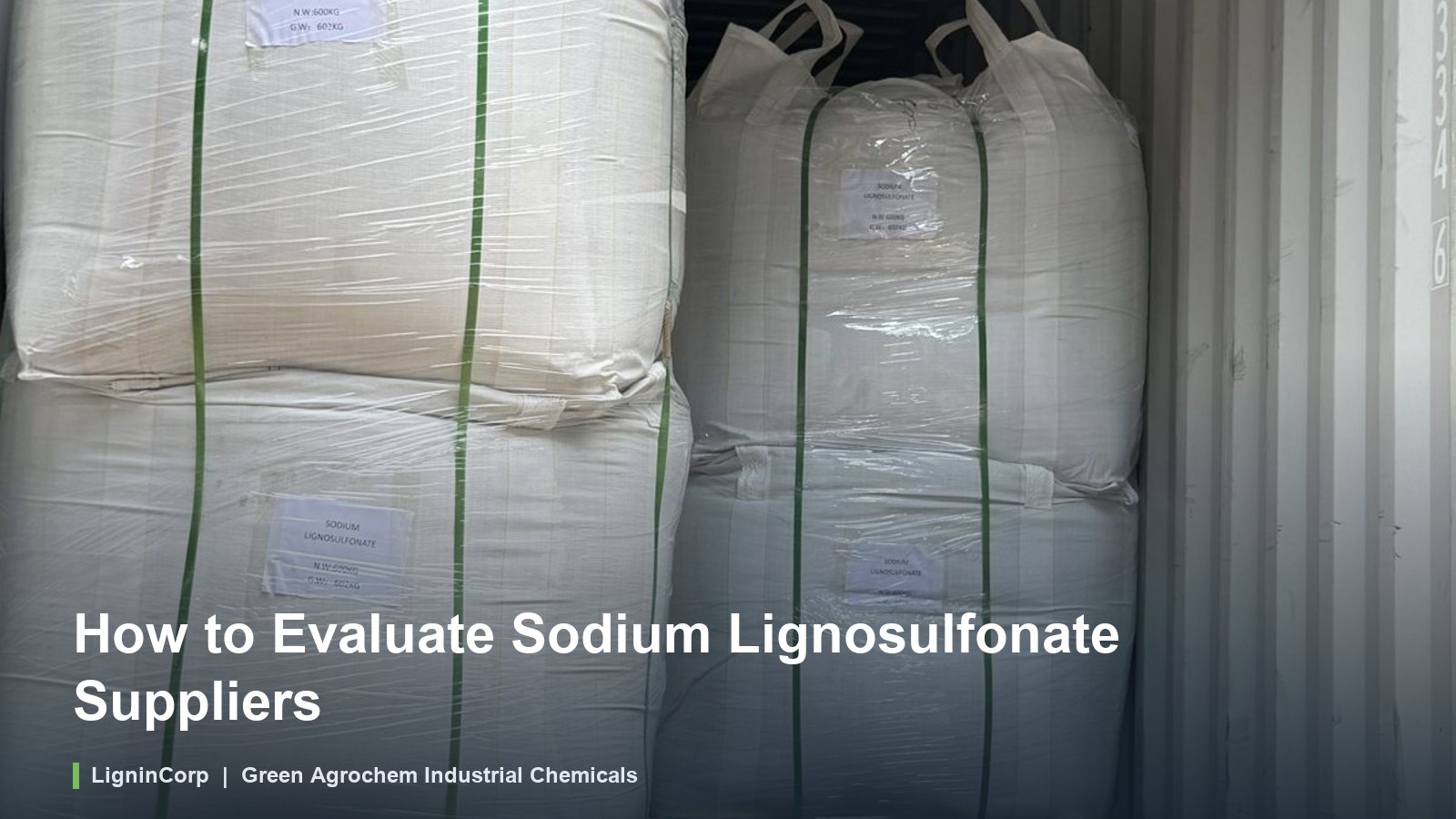
For powder, confirm inner liners, closure, pallet protection, container loading and moisture-control practices. For liquid, confirm solids, viscosity, drum or IBC compatibility, temperature limits and unloading requirements. Compare quotations using the same Incoterm, destination, net product weight and solids basis.
Request realistic production and shipping lead times, quotation validity, minimum order for the selected packaging and the procedure for urgent or delayed orders. These terms should be stated in the quotation rather than presented as universal industry rules.
Supplier warning signs
- The product name, specification, TDS, SDS and COA do not identify the same grade.
- Guaranteed application results are offered without knowing the formulation or test method.
- The supplier cannot explain important batch variations or manufacturing-source changes.
- A quotation omits solids, packaging, Incoterm, destination or validity period.
- Environmental, safety or regulatory claims are made without grade-specific documentation.
- A pre-shipment sample is not traceable to the commercial product.
Information for an effective RFQ
Include the application, required form, target specification, destination, trial and regular quantities, packaging, Incoterm, delivery window and required documents. If a current product is being replaced, provide the relevant TDS and test target without disclosing confidential formulation details.
Review the industrial sodium lignosulfonate product page, the quotation and landed-cost guide, and the powder grade-selection guide. Neutral chemistry and specification background is available from the Lignosulfonate Knowledge Hub.
