Liquid lignosulfonate is supplied as sodium, calcium and potassium salt grades for direct dosing, blending and bulk industrial use. The grades are not interchangeable: salt form, solids, insoluble matter, lignosulphonate content, reducing sugars, pH and density all affect handling and application performance. Select a grade by product code and confirm shipment values from the batch COA.
Liquid Grade Comparison
The values below are typical values from the current Green Agrochem technical data sheets (Revision 2.0 for each grade). They are reference values, not a binding specification; the COA accompanying each shipment reports batch results.
| Parameter | Liquid Sodium – Grade One | Liquid Calcium | Liquid Potassium |
|---|---|---|---|
| Product code | GAC-NaLS-L | GAC-CaLS-L | GAC-KLS-L |
| Appearance | Black liquid | Black liquid | Black liquid |
| Solid content | 45% min | 45% min | 45% min |
| Water-insoluble matter | 1% max | 2% max | 2.5% max |
| Lignosulphonate content | 50% min | 45% min | 45% min |
| Reducing sugar | Around 7% | Around 4% | Around 4% |
| Density | 1.20–1.32 g/ml | 1.265 g/ml | 1.20–1.30 g/ml |
| pH | 7.0–11.0 | Around 5.0 | 4.0–7.0 |
| Other | – | – | K2O 8–10% |
Solid content and lignosulphonate content are different measurements and may be reported on different bases. When comparing offers or converting a dosage, confirm whether a percentage refers to the liquid as supplied or to dry solids.
Where Each Grade Is Evaluated
- Liquid sodium – Grade One: ceramic slips and pressed bodies, casting-sand binders and fiberboard formulations. See the Liquid Sodium Lignosulfonate – Grade One product page.
- Liquid calcium: concrete plasticizing, cement grinding aid, raw-mix slurry deflocculation, ceramics and general binding or dispersion. See the liquid calcium lignosulfonate specification and application guide.
- Liquid potassium: construction and ceramic uses; its K2O content also makes it relevant to agricultural formulations. See potassium lignosulfonate, and for fertilizer use our ChinaLignin agricultural division’s guide to lignosulfonates in fertilizer formulation.
Application suitability and addition level must be established by laboratory and plant trials with the actual materials and process. For concrete trials, see liquid lignosulfonate for concrete workability.
Packaging, Handling and Storage
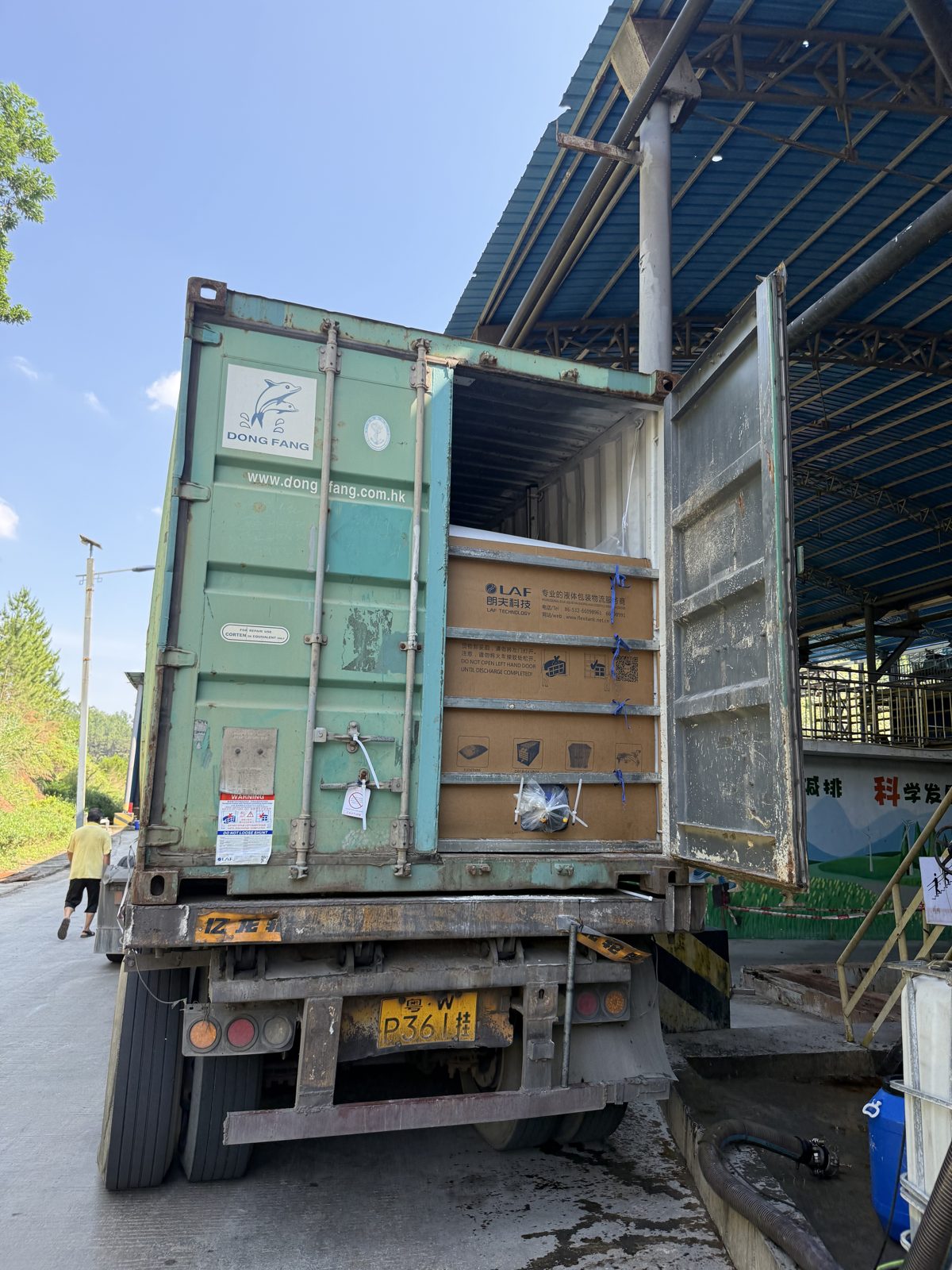
Supplied in IBC totes or flexitanks. Store in a cool, dry, well-ventilated area and protect from freezing. Shelf life is 12 months from the date of manufacture under recommended storage conditions. Avoid mist inhalation and eye or skin contact, keep containers closed when not in use and follow the current SDS.
Grade Selection and Enquiries
For supplier qualification, see our liquid lignosulfonate buyer qualification guide. To request the current TDS, SDS, representative COA, a sample or bulk packing details, email info@greenagrochem.com with the application, required grade, annual quantity, packing and destination.
All Liquid Grades
| Grade (code) | Solids | Lignosulphonate (dry basis) | pH | Reducing sugar | Water-insoluble |
|---|---|---|---|---|---|
| Sodium Grade One (GAC-NaLS-L) | 45% min | 50% min | 7.0 – 11.0 | around 7% | 1% max |
| Sodium Grade Two (GAC-NaLS-L-2) | 45% min | 50% min | 9.0 – 13.0 | around 4% | 2.5% max |
| Sodium Grade Three (GAC-NaLS-L-3) | 45% min | 50% min (w/w) | 4.0 – 7.0 | around 14% | 2.5% max |
| Calcium general (GAC-CaLS-L) | 45% min | 45% min | around 5.0 | around 4% | 2% max |
| Calcium acidic (GAC-CaLS-L-Acidic) | 45% min | 55% min | 4.0 – 6.0 | around 12% | 1.5% max |
| Potassium (GAC-KLS-L), K₂O 8 – 10% | 45% min | 45% min | 4.0 – 7.0 | around 4% | 2.5% max |
| Ammonium acidic (GAC-NHLS-L-ACD), N 3 – 5% | 45% min | 50% min | 4.0 – 6.0 | around 15% | 2.5% max |
| Ammonium alkaline (GAC-NHLS-L-ALK), N 3 – 5% | 45% min | 50% min | 8.0 – 10.0 | around 10% | 2% max |
How to Choose
| If you need | Look at |
|---|---|
| Low insolubles for nozzles, filters or ceramics | Sodium Grade One (1% max) |
| High pH, low sugar | Sodium Grade Two |
| Stronger binding or set retardation | Sodium Grade Three (around 14% sugar) |
| Higher lignosulphonate content | Calcium acidic (55% min) |
| General construction and dust control | Calcium general |
| Nutrient value for fertilizers | Potassium or ammonium grades |
Frequently Asked Questions
What liquid lignosulfonate grades are available?
Sodium Grade One, Two and Three, calcium general and acidic, potassium, and ammonium acidic and alkaline, all at 45% min solids.
Which liquid grade has the lowest insolubles?
Sodium Grade One, with 1% max water-insoluble matter.
Which liquid grade has the most sugar?
Ammonium acidic (around 15%) and sodium Grade Three (around 14%). Sugar increases binding and set retardation.
